



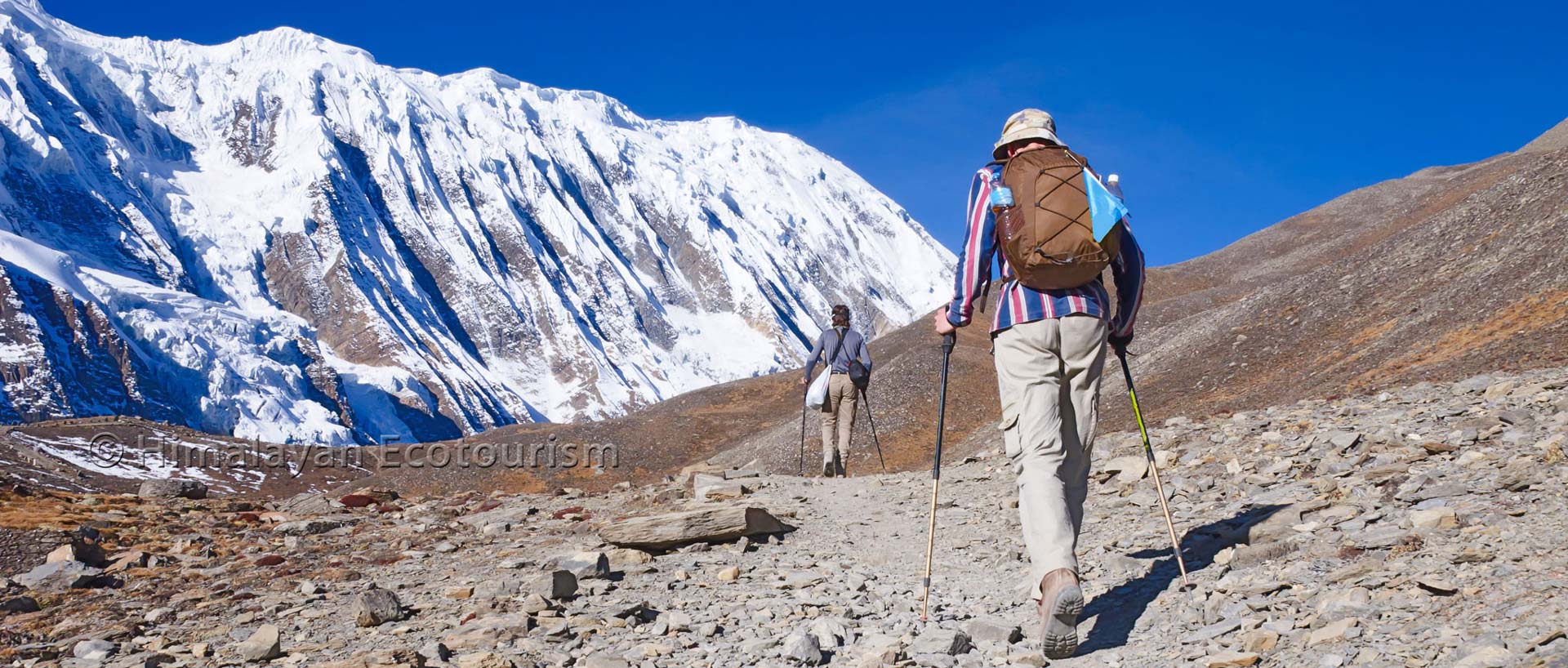
Travelling to India and to the Himalayas

Read this before your travel to India
For most of our journeys to the Himalayas, your adventure begins with a flight to India.
If this is your first time travelling to the country, it’s natural to feel a mix of excitement, curiosity, and perhaps a few concerns or practical questions. This page is designed to help you feel informed, confident, and at ease before your departure.
Here, we’ve gathered answers to the most common questions travellers have before and during their trip. Being well prepared is key to a safe, comfortable, and enjoyable journey, and that is exactly what we aim to support.
You’ll find information to help you prepare before leaving home, as well as guidance on what to expect once you are travelling in India – particularly in the Himalayan regions.
And of course, if you have any additional questions or need clarification at any stage, please don’t hesitate to get in touch with us. We’re always happy to help.
Vaccinations for India

VACCINATIONS FOR INDIA
Take the opportunity to check the status of all your vaccines.
Travelling to India can be a good opportunity to review and update your routine vaccinations. We recommend checking that standard immunisations such as tetanus, diphtheria, whooping cough, polio, and measles are up to date before departure.
Vaccinations against hepatitis A and hepatitis B are also commonly recommended for travellers to India, depending on the duration and nature of your trip.
The risk of malaria varies significantly by region. For most travellers, especially those spending time in higher-altitude or cooler regions, the risk is low and preventive medication is usually not required. However, mosquito protection is still advisable, particularly during stays or transits in warmer, urban, or lowland areas.
Using mosquito repellent, wearing long sleeves in the evenings, and sleeping in protected areas can also help reduce the risk of dengue fever, which is present in some parts of India, including large cities.
Health recommendations can change over time and may vary depending on personal medical history. For personalised advice, we strongly encourage you to consult your physician or a travel health clinic before departure. You are also welcome to contact us if you have any questions related to health and safety while travelling in India.
How to get a visa for india?
To enter Indian territory, you need a visa. Be sure to have a passport whose validity exceeds by at least 6 months your date of return from India.
As you are travelling for tourism purposes, you can apply for an E-tourist visa. This is done online on the official website of the Indian government, here Indian Visa Online.
The application procedure is independent of your nationality, it is the same for everyone (with some exceptions), and therefore the online application is in English. Don’t worry, we’re here to help if you have any concerns.
There are 30-day visas, but it is more secure to take the visa valid for 1 year. The one-year visa is valid from the date of your ETA (Electronic Travel Authorization), a document that will be delivered to you by email a few days after you have applied online.
You will have to print it and take it with you to present it to immigration with your passport when you arrive in Indian territory (at the airport).
If, for example, you receive your ETA on March 21, you can travel to India until March 20 of the following year. Please note that you cannot stay in Indian territory for more than three consecutive months. If you want to stay longer, you will have to leave the territory and then come back.
Before you begin the application process, make sure you have a copy of your photo ID and a copy of the page of your passport that contains all of your information on your computer. Some instructions to follow absolutely:
For photo ID
- The photo must be in JPG format
- File size must be between 10KB and 1MB
- The photo should be square and borderless.
- Like all passport photos, it must be on a white background or a very light even color. Centered face, neutral expression, no glasses, etc.
For passport copy
- The document must be in PDF format
- File size must be between 10KB and 300 MB
To the latest news, a one-year E-tourist visa costs 40 Eur, a one-month visa costs 25 Eur.
When you are ready with your documents (photo and passport copy) and your bank card for payment, you can start the Indian Visa Online application procedure. Indian Visa Online.
You must click on the “Apply for e-visa” link in the second frame at the bottom of the page.
If you are not sure that you can answer easily, you can see the entire form here : Have a look at the form before starting.
If you feel lost, don’t worry, ask us!
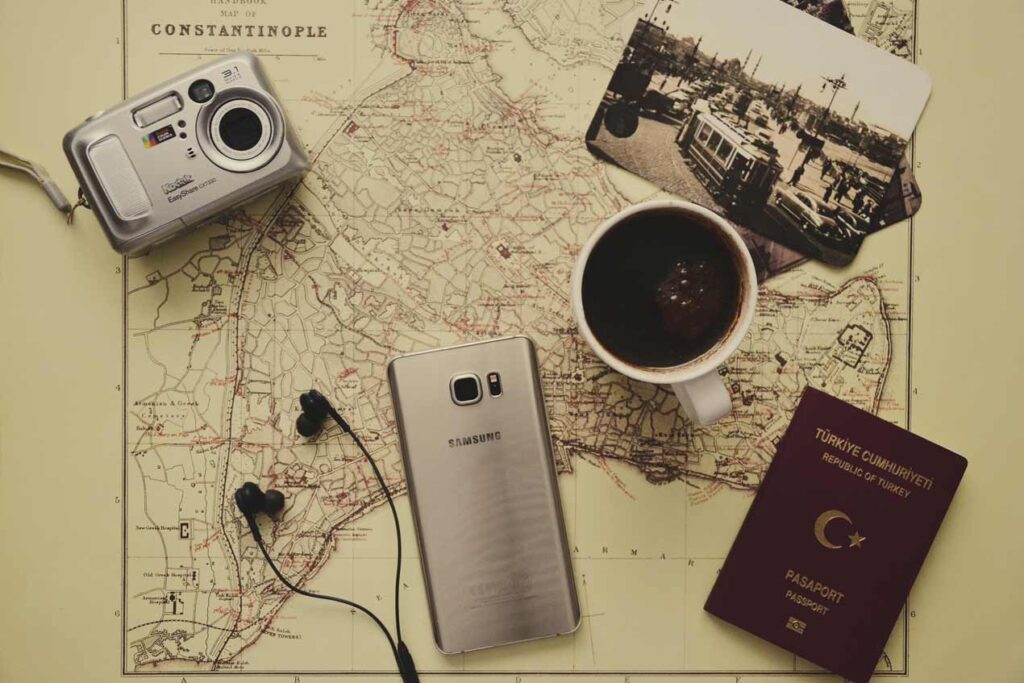
VISA FOR INDIA
Everything happen online !
International flights to India
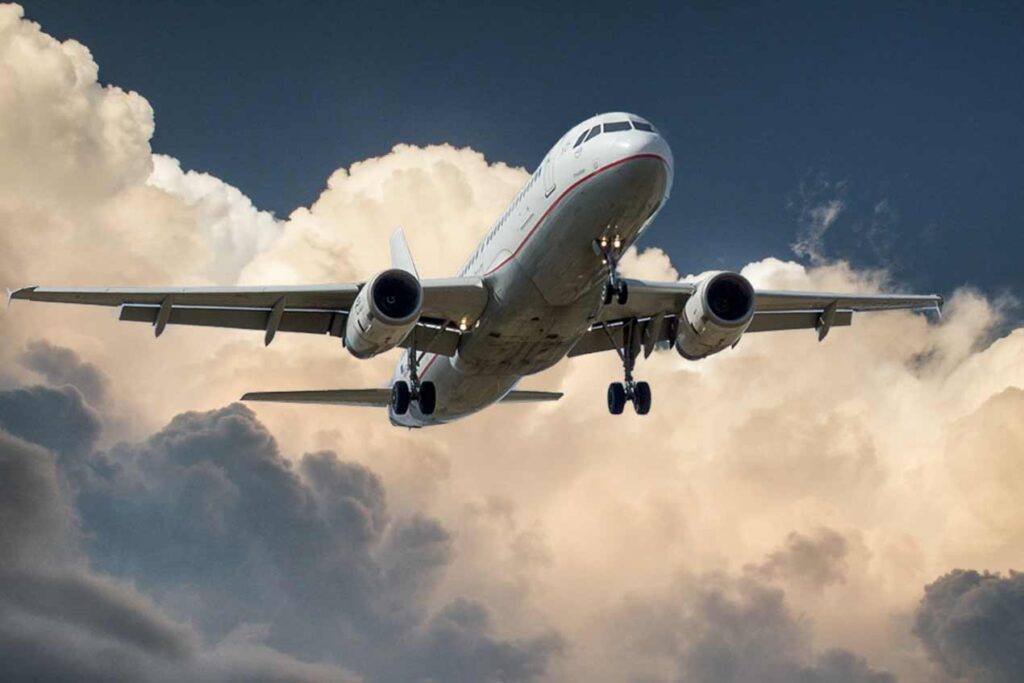
FLYING TO INDIA
The flights to India are relatively cheap.
Due to the volatile nature of airline ticket prices, we generally ask our travellers to book their international flights themselves. This allows you greater flexibility in choosing routes, airlines, and travel dates that best suit your preferences.
Despite the long distance between Western Europe and the Indian subcontinent (around 8 hours of flying time on average), flight prices are relatively reasonable compared to many other long-haul destinations. A similar situation applies to flights from the United States, where the cost per mile is often quite competitive.
As always, ticket prices vary depending on the season. The usual rule applies: booking well in advance helps secure better fares and avoids last-minute price spikes. As a general indication, you can expect international flight prices from Europe to Delhi – the main gateway to the Himalayas – to range between EUR 500 and EUR 700 per person, taxes included.
If you encounter any difficulty while booking your flights, please feel free to contact us for guidance or assistance. When travelling as a group, it often makes sense to book tickets together to ensure consistency in schedules and fares. You may either do this through your own travel agent or ask us to assist with the booking. In such cases, tickets will be arranged at competitive market rates.
Wanna book your flight with us ? Enquire now !
What to take for your trip to India?
Take the minimum
Travelling light always makes the journey more comfortable, especially in the mountains.
If your trip includes trekking, you do not need to bring any camping equipment. We use high-quality trekking and camping gear and provide everything required on the ground, including:
- Tents (different setups for road trips and trekking)
- Sleeping bags with cotton liners for hygiene
- Comfortable mattresses
- Walking poles
- All necessary cooking equipment for outdoor meals
You only need to bring your personal belongings.
Clothing
When it comes to clothing, try to keep things simple. In the mountains, you generally won’t need a fresh outfit every day. Practical, comfortable layers are far more useful than variety.
Laundry services are available in some hotels, but not on all our tours. If this is important to you, feel free to ask us in advance and we’ll let you know what to expect for your specific itinerary.
Bring clothing suitable for both warm, sunny days and cold conditions. Even during summer (July–August), temperatures at high altitudes (above 4,000 metres) can drop below zero at night, while daytime temperatures in the same areas may reach 30°C.
A lightweight waterproof and windproof jacket or rain suit is strongly recommended, as mountain weather can change quickly and unpredictably.
First aid & personal medication
Heco always carries a basic first aid kit with essential supplies. However, we strongly recommend that you bring a personal first aid kit, especially if you take any regular medication.
Commonly useful items include :
- Paracetamol (for pain or fever)
- Medication for diarrhoea (e.g. Loperamide)
- Motion-sickness tablets
- A broad-spectrum antibiotic for respiratory or digestive infections (e.g. Azithromycin or Ofloxacin), if prescribed by your doctor
- Anti-inflammatory cream or tablets for muscle and joint pain
- Disinfectant gel or wipes
You may also find it useful to bring:
- Water purification tablets
- Mosquito repellent
All of these items are easily available in pharmacies, either in your home country or in India.
Other essentials
- A torch (preferably a headlight).
- A hat (or cap) and sunglasses.
- Sunscreen and lip balm.
- An extra pair of comfortable and compact shoes (or slippers) for the evenings shall come in handy when you least expect it.
- Your toiletries should include a washcloth and a light towel.
- Two passport photos and copies of your passport and visa.
Consider any other small camping gear for your comfort, although there is no need to clutter up.
For the treks
For hiking days, we recommend bringing a small daypack (20–30 litres). For longer treks, a larger, well-fitted trekking backpack is preferable to comfortably carry your daily essentials.
A good pair of trekking shoes or boots is essential. Make sure they are well broken-in before the trip to avoid discomfort or blisters.
When it comes to clothing, lightweight technical trekking apparel is strongly recommended over everyday clothing. Technical fabrics dry faster, provide better insulation, and help you stay comfortable throughout the day, especially during long walks and changing weather conditions.
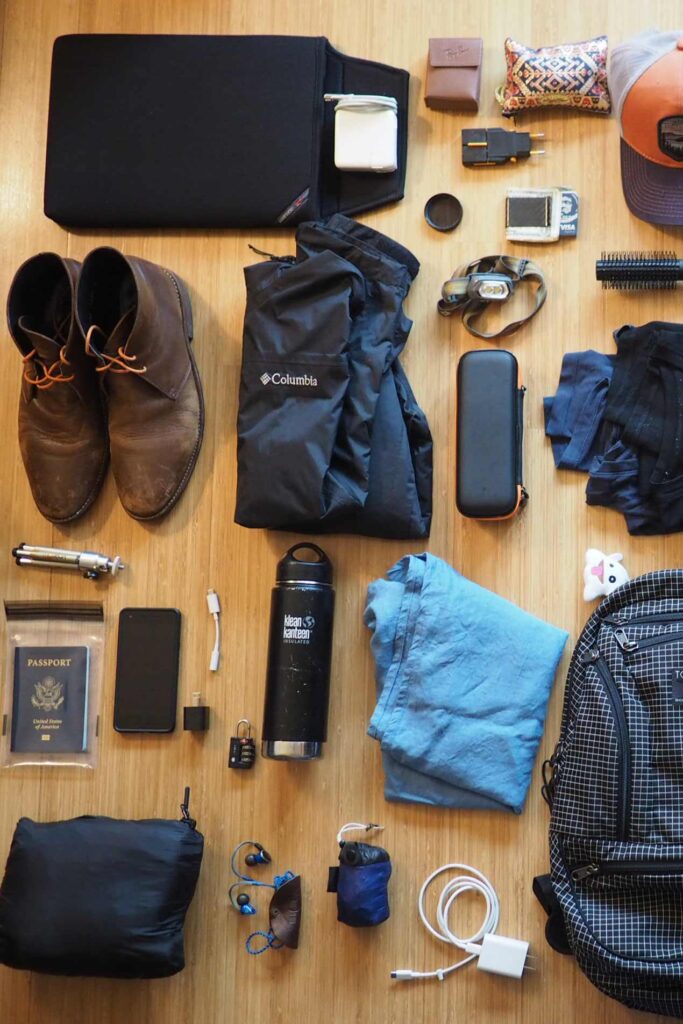
WHAT TO TAKE ?
Rule of the thumb : take the minimum !
Health concerns while traveling to India

ARE YOU THIRSTY ?
Hygiene is a concern throughout India. Be aware 🙂
India’s biological environment is different from that of many Western countries, and some travellers may experience mild digestive discomfort, particularly during the first days of their stay. This is quite common and usually temporary.
To stay comfortable, you may choose to carry Loperamide in your personal first-aid kit. While there is no need to worry excessively, a few simple precautions can significantly reduce the risk of traveller’s diarrhoea, which is mainly transmitted through food, water, objects, or unclean hands.
Practical precautions
- Wash your hands regularly with soap, especially before meals. Carrying a small bottle of hand sanitiser is also very useful and highly effective.
- Avoid drinking tap water, particularly in cities. We strongly recommend using a portable water filter, which allows you to drink safely while also reducing plastic waste from bottled water.
- Mountain water is generally very clean, and in most cases safe to drink. However, using a water filter provides complete peace of mind. Water bottles with integrated filters (such as Lifestraw-type bottles) are a very good option.
- Enjoy fresh juices occasionally, but avoid drinks containing ice, especially in urban areas.
- Cooked meals are safe and widely enjoyed. During the first few days, it is advisable to avoid raw salads. Always peel fruits before eating them.
These simple habits usually allow travellers to enjoy their journey comfortably and without issues.
Any further question ? Enquire now !
About food in India
Indian food is wonderfully diverse and full of flavour, and yes, it can be spicy! For many travellers, adjusting to new tastes and spices may take a little time at the beginning.
If you’re not used to spicy food, don’t worry. Most people adapt within a few days and often end up enjoying it more than expected. It’s quite normal to eat a little less during the first couple of days; you can easily balance this with fruits, biscuits, or lighter meals until your appetite fully returns.
Our guides will always do their best to help you find food that suits your preferences, both in hotels and restaurants. Do keep in mind that in some remote areas or small local eateries, the menu may be limited. These places usually serve what locals eat daily – simple, fresh, and authentic – rather than offering a wide variety of options.
Indian cuisine is largely vegetarian by default, and you’ll discover an impressive range of curries, vegetables, lentils, and snacks. If you prefer meat, you can look for items listed as “non-veg” on menus. Chicken is most commonly available, with mutton or fish offered occasionally, depending on the region.
As for meals during treks, you can be completely at ease. Even in the wilderness, we always take great care to provide wholesome, nourishing, and well-prepared food, adapted to the conditions and the day’s effort.

FOOD IN INDIA
Don’t think an Indian restaurant will make yourself ready for the real Indian food !
Hotels and other night stays in India

FOUR CATEGORIES OF HOTELS
This hotel comes in the Cat. B, with a nice local style.
We do not systematically select the most expensive hotels, as this would unnecessarily increase the overall cost of our tours. However, we are extremely strict about cleanliness, hygiene, and basic comfort – non-negotiable aspects of any stay. Comfortable bedding, clean rooms, appropriate heating or air-conditioning when needed, good food, and genuine hospitality from hosts are standards we always insist on.
The same philosophy guides our choice of homestays and guesthouses. While these cannot always be assessed with the same formal criteria as hotels, we carefully select places where cleanliness, care, and human warmth are clearly felt. Staying locally may involve small compromises in comfort, but it is also where some of the most meaningful encounters take place.
Across our itineraries, accommodations fall into the following categories:
Category A – Luxury hotels
4- or 5-star hotels offering high levels of comfort and services. These are generally not included in our standard tours, but can be arranged on request for travellers wishing to enjoy luxury in selected locations.
Category B – Comfortable hotels & boutique stays
Our preferred choice in larger towns and cities such as Delhi, Shimla, Jaipur, etc. These accommodations offer very good comfort, quality food, room service, laundry facilities, and reliable standards. Boutique hotels and well-run guesthouses also fall into this category.
Category C – Simple, local, and welcoming (our favourite)
This category reflects the spirit of many of our journeys. These are simple but clean and well-maintained guesthouses, selected for their hygiene, warmth, and hospitality. While you should not expect luxury, you can count on basic comfort, a peaceful night’s sleep, and above all a genuine human experience that often becomes one of the highlights of the trip.
Category D – Traditional homestays
Mostly found in more remote or secluded areas, these are real family homestays. The experience here is deeply human and immersive. Comfort is basic: simple beds, unadorned rooms, and sometimes shared or non-attached bathrooms. Bathing may not be available. These stays are about living like a local, and a certain level of flexibility and openness is required.
Camping
Camping usually takes place during treks, and occasionally on road journeys as well. While the setting is simple by nature, we do everything possible to ensure comfort. We use high-quality tents, sleeping systems, and equipment, and Heco is well known for its comfortable camps and well-organised bivouacs, even in remote environments.
Any further question ? Enquire now !
Altitude sickness
Some of our journeys involve travel and overnight stays at high altitude, where a few travellers may experience mild symptoms of altitude sickness. This is common and usually temporary.
To minimise discomfort, all our itineraries are designed with gradual altitude gain in mind. We strongly believe that proper acclimatisation is essential. For example, while some operators travel from Delhi to Leh in two days with only one night en route, we spread this journey over at least three days and two nights, allowing the body more time to adapt.
Even with careful planning, mild symptoms such as headache, fatigue, or shortness of breath can occasionally occur. The best ways to support acclimatisation include:
- Drinking plenty of water
- Resting well
- Avoiding physical exertion, especially during the first days above 3,000 metres
- Listening to your body and communicating any discomfort to your guide
There is a medication called Diamox (Acetazolamide) that can help reduce the risk of altitude sickness. The decision to use it is entirely personal. If you consider taking it, we strongly recommend discussing this with your doctor before your trip.
If requested, Diamox can be purchased in India and made available to you upon arrival in Delhi, at local pharmacy prices.
Our guides are trained to monitor acclimatisation closely and will always prioritise your safety and well-being throughout the journey.
Do you want an advice from our mountain specialist doctor ? Enquire now !

ALTITUDE SICKNESS
Headache and nausea are the first symptoms of altitude sickness.
On the roads of India

ON THE ROADS OF THE HIMALAYAS
Here is a bikers group in Ladakh with our backup jeep.
All road travel during our journeys is carried out in vehicles well adapted to Himalayan terrain. Comfort, reliability, and safety are always our priorities, and all vehicles are regularly maintained.
Our drivers are carefully selected based on their driving skills, prudence, and experience in mountain conditions. They know the terrain well and play a key role in ensuring a smooth and safe journey.
Vehicles for road trips
The Toyota Innova is generally our preferred choice for road journeys, as it offers a good balance of comfort, space, and reliability. However, depending on the itinerary, group size, and budget, other vehicle options may be proposed to keep the tour accessible while maintaining safety and acceptable comfort standards.
Vehicle selection is always discussed in advance with the Heco team, and the final choice is clearly communicated and agreed upon before the trip begins, so that expectations are aligned for everyone.
For larger groups, vehicles such as Force Traveller or equivalent models may be used.
Motorcycle tours
For motorcycle journeys, we work with reliable and experienced suppliers and use well-maintained, recent-model bikes suitable for long-distance and high-altitude riding.
While Royal Enfield motorcycles remain a popular and trusted option, other models are now also available, depending on region and availability. Travellers are welcome to enquire about current options so we can suggest the most suitable motorcycle for the route and riding style.
A mechanic accompanies the group on motorcycle tours to provide technical support whenever needed, ensuring peace of mind throughout the journey.
Any further question ? Enquire now !
Cultural aspects of travelling in India
Whether you are a seasoned traveller or visiting India for the first time, your arrival can feel intense and unfamiliar. After living in more structured and less crowded environments, the energy, density, and contrasts of cities like Delhi – especially areas such as Old Delhi – can be surprising at first.
Don’t worry: one of our guides will meet you upon arrival and support you throughout the journey. A few cultural pointers will help you settle in more comfortably and enjoy the experience with confidence.
Everyday life and movement
Traffic in Indian cities can appear chaotic, with motorists and motorcyclists sometimes driving assertively. When walking in busy areas, stay calm, be attentive, and move cautiously. Patience goes a long way, and it’s best to avoid arguments or confrontations on the street.
Clothing and cultural sensitivity
In large cities, people dress in many different ways. However, in rural areas and Himalayan villages, more modest clothing is appreciated, especially for women. We recommend avoiding outfits that expose too much skin (short shorts, low-cut tops, etc.).
This can also be a wonderful opportunity to try traditional Indian clothing, which is often comfortable, practical, and well suited to the climate. Delhi offers many ready-to-wear options, and your guide will be happy to help you find something appropriate if you wish.
Interactions with people
In remote Himalayan regions, human encounters are often warm, spontaneous, and deeply genuine. In contrast, in highly touristic or crowded urban areas, you may occasionally be approached insistently by strangers. If something feels uncomfortable, it’s perfectly fine to decline politely and move on.
Giving and supporting responsibly
You may encounter people asking for money, particularly in the plains of northern India. While the situation can be moving, we encourage travellers not to give money directly, as this can unintentionally reinforce dependency. Offering food is a more respectful alternative.
By travelling with Heco, you already contribute to long-term social and environmental initiatives that support communities with dignity and sustainability.
Shopping and bargaining
Bargaining is a normal part of shopping in many parts of India. Don’t hesitate to negotiate prices, it’s often expected and done with good humour. We never take travellers to commission-based shops. If you wish to shop, your guide can recommend reliable and ethical places.
Visiting homes and homestays
When entering a private home or staying in a homestay, humility and respect are essential. Always follow your guide’s advice. It is customary to remove your shoes at the entrance, and certain areas of the house may be reserved for family members.
Meals in homestays are often eaten sitting on the floor, using the right hand. The left hand is traditionally avoided for eating. Wash your hands before and after meals, and be mindful of where you place your feet, as pointing feet toward people or sacred spaces can be considered disrespectful.
Approached with openness and respect, these cultural differences often become some of the most memorable and meaningful aspects of travelling in India.
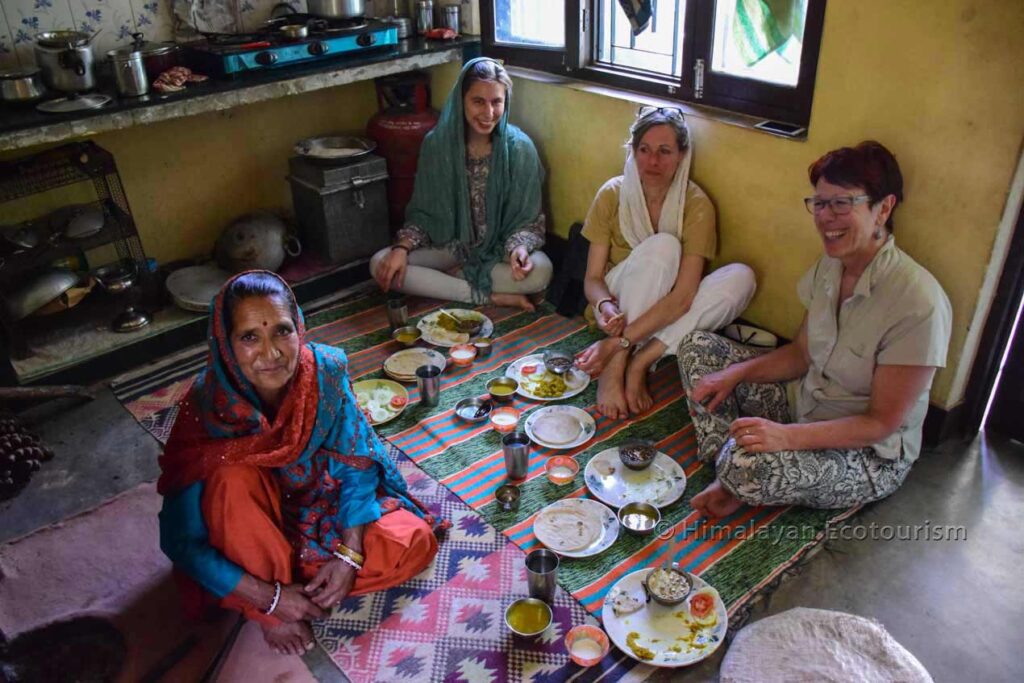
HOMESTAY IN INDIA
Adapting yourself to the local culture may involve eating with your hands on the floor.
Photography

PHOTOGRAPHY IN INDIA
Don’t be intrusive with the locals. Be discreet and respectful.
Photography is an important part of travel today. It helps us remember places, people, and moments long after the journey is over.
In India, while many people are accustomed to cameras, photography – especially in rural areas – can still feel personal and sensitive. For this reason, we encourage travellers to approach photography with awareness and respect.
Opportunities to take photos and videos are endless, but we kindly ask you to pause and sense the atmosphere before reaching for your camera. Take time to connect with people first. A shared smile, a short conversation, or simply being present can make a big difference. When a relationship is established, photography becomes more natural and comfortable for everyone involved.
Always ask for permission before photographing individuals, especially in villages, homes, or intimate settings. A simple gesture or a question – often guided by your guide – goes a long way.
Please also note that professional photography or videography may require special permission, particularly in national parks or protected areas, where regulations are strictly enforced.
When practiced thoughtfully, photography can become a meaningful exchange rather than an intrusion, one that honours both the moment and the people who make it special.
About your money in India
In the past, currency exchange offices were common in most tourist areas across India. Today, with the widespread availability of ATMs and the broad acceptance of credit and international debit cards, it is generally unnecessary to bring foreign currency to exchange into Indian Rupees.
Most international debit and credit cards can be used at ATMs in India, often offering favourable exchange rates compared to cash exchange counters.
Typically, you can withdraw up to INR 10,000 per transaction, and in many cases up to two withdrawals per day, allowing a total of around INR 20,000 per day.
As ATM withdrawals usually incur a fixed fee (often around EUR/USD 5 per transaction, depending on your bank), it makes more sense to withdraw a larger amount at once rather than several small withdrawals.
ATMs are conveniently available in the arrival area of Delhi International Airport, allowing you to withdraw Indian Rupees immediately after landing.
As always, we recommend informing your bank before travelling to India to ensure your card is enabled for international use and to avoid any unexpected blocks.

ATMS IN INDIA
ATM have mushroomed in the country, making it easier for the travellers.