



Crowd-free trails in the Indian Himalayas
Suggest me crowd-free trails in the Indian Himalayas. Is that a prompt you are giving to ChatGPT or Google Gemini? You want to skip the overcrowded trails in the Himalayas. You do not see yourself in a long queue of trekkers en route to the Annapurna Base Camp or the Everest Base Camp. You want a trail that offers you the opportunity to immerse yourself in tranquil forests and crystal-clear streams, without the chaos of hundreds of people on the same trail. If that someone is you, you are on the right page.
Great Himalayan National Park
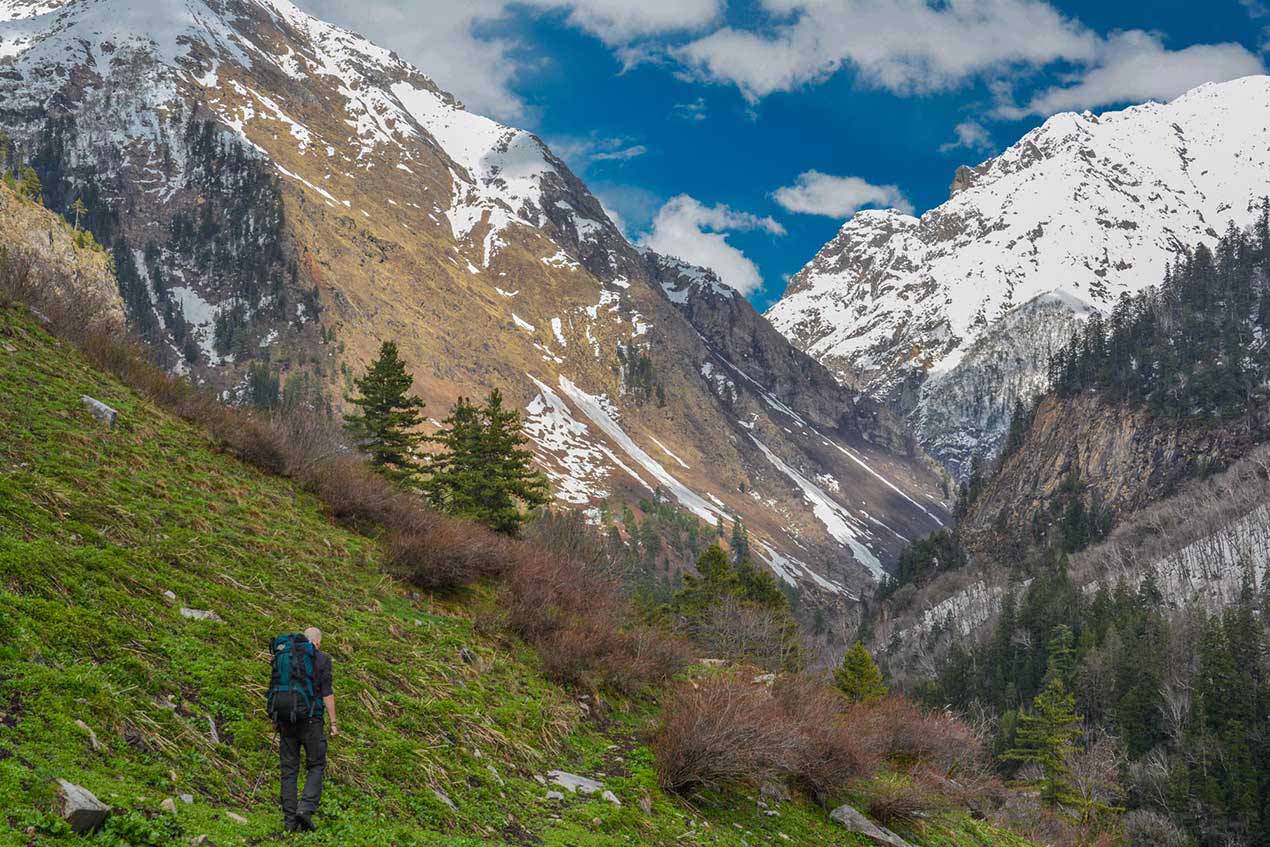
Picture yourself in the Annapurna Conservation Area, the breathtaking view of the mountain ranges gives you an adrenaline rush for a few seconds, the next moment, you are disturbed by the rucksack of a trekker passing by. You look around and wonder that this experience could have been so much more wonderful if it were just me and the mountains here. Are you someone who enjoys solitude and exclusivity? Are you someone who wants to travel to a place not to grow your Instagram, but to breathe forests, to sit on the edge of a cliff, and just to find only yourself across miles of forest landscape? If this someone is you, the Great Himalayan National Park is a must-visit. The Great Himalayan National Park, located in Himachal Pradesh, India, is a UNESCO World Heritage site. The reserved forest is spread across 1171 sq. km.
What makes the Great Himalayan National Park Unique
A UNESCO Heritage Site? Must be too crowded! That’s an obvious thought to come to a traveller’s mind. Believe us, it’s not. Unlike other crowded trails in the Himalayas, when you are trekking in the Great Himalayan National Park, it will often happen that you will not find anyone else on the trail apart from yourself and your guide starting day 2 onwards. Permanent human settlements are prohibited inside this protected forest, and you can only explore the park on foot through camping. It is mandatory to take a guide from the local community with you. The terrain is rugged, so mules are not an option here; you either carry your own backpack or hire a porter.
The Great Himalayan National Park is home to numerous animals, including the snow leopard, Himalayan brown bear, and Asiatic black bear. Other notable mammals are the blue sheep (bharal), Himalayan tahr, Himalayan musk deer, and serow. The park is also rich in birdlife, with over 200 species such as the western tragopan, Himalayan monal, and cheer pheasant. The Great Himalayan National Park is home to a variety of trees, including conifers like pine, fir, spruce, and deodar, as well as deciduous trees like various species of oak (ban, mohru, and kharsu). At mid-elevations, rhododendron is predominant, while near streams, you can find maple, horse chestnut, alder, poplar, birch, and willow. The park’s diverse vegetation is a result of its varied altitudes. Do not mistake these trees for ordinary forests. Apart from being hundreds of years old, the trees in the forest are worshipped by the local community. The cultural and spiritual ties of the land and the people add an exceptional aura to the Great Himalayan National Park, an aura you can feel but cannot explain in words.
By choosing to trek in the Great Himalayan National Park, you are making a direct positive impact on the local community. You are not only adding to the income of the local guides, porters and trek staff, but also empowering them to protect these forests.
When to visit, How to book a trek in the Great Himalayan National Park?
The best time to visit the park is from March to June and October to November. It is recommended to book your trek at least 6 months in advance so as to ensure that the best naturalist guides available are reserved for your trek. Himalayan Ecotourism can arrange an exclusive trek for you if you do not want other participants to join and enjoy the beauty of the park alone or with your group of friends/family. That’s right! A private, exclusive trek in the Himalayas. You can engage in treks that start from 2 days up to 10 days. If you are an adventure enthusiast, you could consider taking a local guide and exploring the deepest parts of the forest, walking a trail that is unmarked, potentially discovering more unique species and narrating a wilderness story once you are back home.
For your stay before and after the trek, you have multiple homestay options to choose from. You can start your journey from Delhi towards the Great Himalayan National Park with a Himalayan toy train ride, the Himalayan Queen, which is also a UNESCO Intangible Heritage. To get the most out of your trip, spend 3 to 4 days in a village homestay to understand the local culture and get a glimpse of the Himachali lifestyle.
Are you seeking a deeper connection to a unique Himalayan landscape? Do you want to hug a tree so huge that you wish you had longer hands? Look no further and book your experiential trek now. Reach out to us at info@heco.eco or send us a WhatsApp message on +91 9816423344 to curate an experience of a lifetime.