




Places to visit in Ladakh

Not to miss in Ladakh
A quick insight into the top destinations of Ladakh

Manali to Leh Road
An adventurous road trip

Leh, Capital of Ladakh
The gateway to magnificent places in Ladakh

Monasteries of Ladakh
Experience the cultural bonds

Lakes of Ladakh
Tso Moriri, Tso Kiagar, Tso Kar, Tso Marpo, Pangong Tso.
Changthang plateau
The cultural and geographical continuity of Tibet

Zanskar range
A mountain range like no other, unveiling the history of the Great Himalayan Range

Nubra valley
Another set of natural wonders in Nothern Ladakh
Things you should not miss in Ladakh
Ladakh – unparalleled landscapes, ever-shifting skies, a rich and distinct culture, and a mesmerizing night sky that will leave you breathless. Ladakh is often deemed a dream destination by wanderers and adventurers alike.
Often referred to as ‘Heaven on Earth’, explore these must-dos to make the most of your Ladakh adventure when venturing into this pristine cold desert region.
Ladakh Top Destinations
Leh – The Vibrant Gateway
Leh, the capital of Ladakh, is the perfect starting point for your adventure. Explore the bustling markets, historic Leh Palace, and enjoy stunning views of the surrounding mountains. This town is a blend of traditional culture and modern amenities, setting the stage for your exploration of Ladakh.
Pangong Lake – The Blue Jewel
Pangong Lake is renowned for its mesmerizing blue waters that shift hues throughout the day. At an altitude of 14,270 feet, this high-altitude lake offers breathtaking views and a tranquil setting. A must-see for any traveler in Ladakh, it’s perfect for photography and serene reflection.
Nubra Valley – A Desert Oasis
Venture into the Nubra Valley, a unique desert region at the northern edge of Ladakh. Famous for its sand dunes and Bactrian camels, this valley also features the impressive Diskit Monastery, home to a giant statue of Maitreya Buddha. The contrast between the desert landscape and lush greenery is striking and unforgettable.
Tso Moriri Lake – The Serene Sanctuary
Tso Moriri Lake, located at 15,000 feet, is a tranquil, lesser-known gem in Ladakh. Surrounded by snow-capped peaks and home to diverse wildlife, this lake offers a peaceful retreat from the more frequented spots. It’s an ideal destination for nature lovers and those seeking solitude.
Hemis Monastery – The Spiritual Heart
Hemis Monastery, one of the largest and wealthiest in Ladakh, is known for its grandeur and spiritual significance. Founded in the 17th century, it hosts the annual Hemis Festival, which attracts visitors from around the world. The monastery’s vibrant murals and ancient artifacts provide deep insights into Tibetan Buddhism.
Thiksey Monastery – The Mini Potala Palace
Perched on a hilltop, Thiksey Monastery offers stunning views of the Ladakh valley. Its architecture, reminiscent of the Potala Palace in Lhasa, and its impressive collection of statues and scriptures make it a significant spiritual and cultural site in Ladakh.
Zanskar Valley – The Adventurer’s Paradise
For thrill-seekers and nature enthusiasts, Zanskar Valley is a remote haven in Ladakh. Known for its rugged landscapes and thrilling white-water rivers, this valley is perfect for trekking, river rafting, and experiencing the raw beauty of Ladakh. The Chadar Trek, which traverses a frozen river, is particularly renowned among adventure enthusiasts.
Shanti Stupa – The Peaceful Pinnacle
Shanti Stupa is a stunning white-domed structure perched on a hilltop in Leh. Built to promote peace and prosperity, this stupa offers panoramic views of Leh and the surrounding valleys. Its serene ambiance and striking architecture make it a serene spot for reflection and panoramic photography.
Leh Palace – The Regal Ruins
Once a royal residence, the Leh Palace stands as a historical monument overlooking the town of Leh. Built in the 17th century, this nine-story palace was modeled after the Potala Palace in Tibet. Its ruins offer insight into the rich history and architectural grandeur of the region.
Khardungla – The High-altitude Pass
Khardungla is one of the highest motorable passes in the world, reaching an altitude of 18,380 feet. It serves as a gateway to the Nubra and Shyok valleys. The pass provides spectacular views of the surrounding peaks and is a thrilling destination for those seeking high-altitude adventure.
Lamayuru Monastery – The Moonland Marvel
Known for its unique lunar-like landscape, Lamayuru Monastery is one of the oldest and most important monasteries in Ladakh. Founded in the 10th century, it offers a glimpse into ancient Tibetan Buddhist traditions and features stunning murals and relics amidst a dramatic backdrop.
Phutkal Gompa – The Remote Retreat
Phutkal Gompa is a remote and serene monastery situated in the Zanskar Valley. Known for its unique architecture and stunning location, this gompa is an important center of Buddhist learning and practice. Its isolation adds to the spiritual and peaceful atmosphere, making it a hidden gem in Ladakh.
Hemis National Park – The Wildlife Haven
Hemis National Park is a vast protected area known for its diverse wildlife and scenic beauty. Home to the elusive snow leopard, this park offers excellent opportunities for wildlife spotting and trekking. Its rugged terrain and high-altitude environment make it a key destination for nature enthusiasts.
Best places to visit in Ladakh
Manali to Leh road

Manali to Leh road
The Moore plains, highway to paradise
Ladakh is not only about being there, it is also about reaching there. At Himalayan Ecotourism we strongly recommend you to reach Ladakh by road. There are three reasons behind this advice.
- Best for your acclimatization to the high altitude of Ladakh. Don’t forget that in Ladakh you will be continuously above 3500 m above sea level. And if you visit places like Tso Moriri or other, you will be above 4500 m. Reaching Leh by air doesn’t allow you to acclimatize whereas going by road does the work
- Enjoying smoothly the change of landscape, culture and climate.
- The Manali to Leh road is one of the most beautiful road on earth. It goes through four high passes : Rohtang pass (3975m), Baralacha pass (4890m), Lachungla (5080m) and Tanglangla (5328m).
Manali is still in the “green” part of the Himalayas. There is a sudden change of climate and ecology after crossing the Rohtang pass or the Atal tunnel leading to the Lahaul valley. Once there you can still see some pasture lands, but the forests have almost disappeared from the landscape. Then, after crossing Baralacha, you are a very arid environment. Enjoy the extraordinary rock formations of Zanskar and Ladakh.
Do you want to go to Leh by road in the best and safest way ? Enquire now !
Leh – Capital of Ladakh
If you visit Ladakh you will inevitably pass through Leh, the main town and capital of Ladakh. It is the gateway to most of the places in Ladakh e.g. Nubra valley, Zanskar, and the high altitude lakes of Pangong Tso and Tso Kar.
Leh is connected to the rest of the world via the road ‘Manali to Leh’ and the road ‘Srinagar to Leh’. But these roads are only open during the good season e.g. from May to October. During the rest of the year you must reach Ladakh by air via the Leh airport.
Most people drive into Leh via the southern approach from Manali (in Himachal Pradesh) and less via western approach via Srinagar (in Jammu and Kashmir). Either of these journeys take minimum 2 days though we use to do it in 3 days to give you time to acclimatize to the high altitude of Leh (3500+m / 11,500+ ft).
Please ask us advice before going to Ladakh via Srinagar due to the geopolitical situation in Kashmir. There are no such problems reaching Leh from Manali.
Leh itself is a very nice place to stay and to visit. Some of the places to see in Leh are the Shanti Stupa and the Leh Palace.
Some of the most famous monasteries of Ladakh can be visited in a day trip from Leh. Thiksey monastery for instance is just 18 km away.
During winters Leh is the only place in Ladakh where you will find accommodation facilities. If you plan to travel in winter, please contact us so that we can plan your tour and arrange homestays at the places you want to visit.

Leh Ladakh
The city spreads on the valley that leads to the Khardungla pass
Monasteries of Ladakh
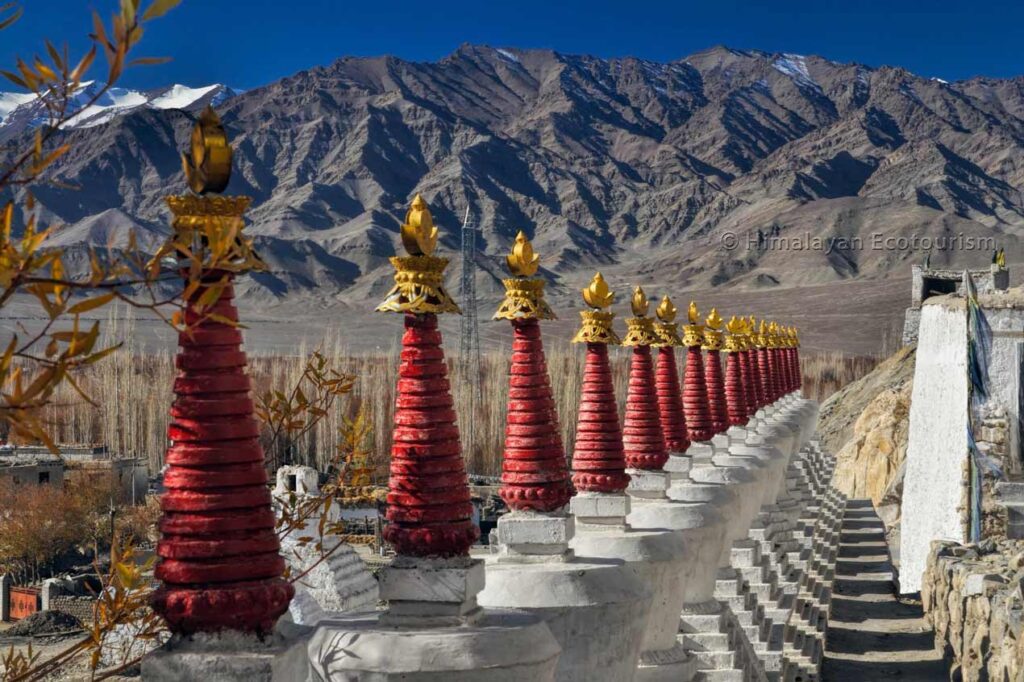
A row of stupas in one of the monasteries
In the monasteries you can see the traditional Tibetan architecture.
Ladakh is known for its rich Buddhist Culture, that draws hundreds of travelers from all around the world. Its fascinating architecture, bright and colorful paintings, meditating monks and the spiritual aura of the place will leave you in awe.
When travelling to Ladakh, one must remember that Ladakh’s monasteries are the heart and the people are its heartbeat.
Some of the famous Ladakhi monasteries include Hemis, Thiksey, Alchi, Likir, Diskit, Spituk, Phyang, Stakna and Takthok monasteries.
All of these monasteries, though preach the same culture and religion, are yet different in their own ways and will leave your eyes wide open every time you visit one.
Some monasteries may have a decent entry free while some may be free of cost. Travelers must be careful about where they click photographs as some monasteries may have prohibited photography rights. The sentiments of the locals and the monks shall be taken under consideration every time one visits these monasteries.
Lakes of Ladakh
The lakes of Ladakh are among these wonders that you shouldn’t miss to see.
The main lakes that you can visit are Tso Moriri, Tso Kiagar, Tso Kar and Pangong Tso. A trek to Tso Marpo will definitely quench your adrenaline thirst. As you guessed, Tso means lake in Tibetan and Ladakhi languages.
All of them are accessible from Leh. Even if it is possible to visit one lake in a day, we recommend you to spend a night near the lake. Reaching any of these lakes involves a several hours journey. And so you will not only spend most of your day in a vehicle, but you may also miss the best time of the day to see the lakes i.e. either in the morning or in the evening.
You can also plan your trip to visit Tso Moriri and Tso Kar while travelling from Manali to Leh by diverting out of the main way on the Moore plains.

Changthang plateau

The Kiagar Tso
The first lake you will discover while travelling to the Changthang plateau
Changthang is a high-altitude plateau in Ladakh, known for its vast landscapes, nomadic culture, and remote beauty.
The region is home to unique wildlife, including the Tibetan wild ass and black-necked cranes. Visiting Changthang offers an immersive experience in the traditional nomadic lifestyle of the Changpa people, who herd Pashmina goats.
The area’s pristine lakes like Tso Moriri and the expansive, rugged terrain make it a remarkable destination for those seeking solitude, cultural insights, and stunning natural scenery.
The Zanskar range
The Zanskar Range in Ladakh is one of the most remote and untouched regions in the Indian Himalayas, offering an unparalleled offbeat experience for adventurous travelers.
With its dramatic landscapes, deep river gorges, and ancient Buddhist monasteries, Zanskar is a haven for those seeking to immerse themselves in nature and culture far from the tourist crowds.
The region is accessible only during the summer months, making it a hidden gem for trekking, camping, and cultural exploration. Whether you’re traversing the high mountain passes or visiting the isolated villages, Zanskar promises an unforgettable journey into one of the last remaining strongholds of traditional Himalayan life.
Explore the Zanskar Range with Himalayan Ecotourism to experience its breathtaking beauty and help support sustainable tourism that benefits the local communities.
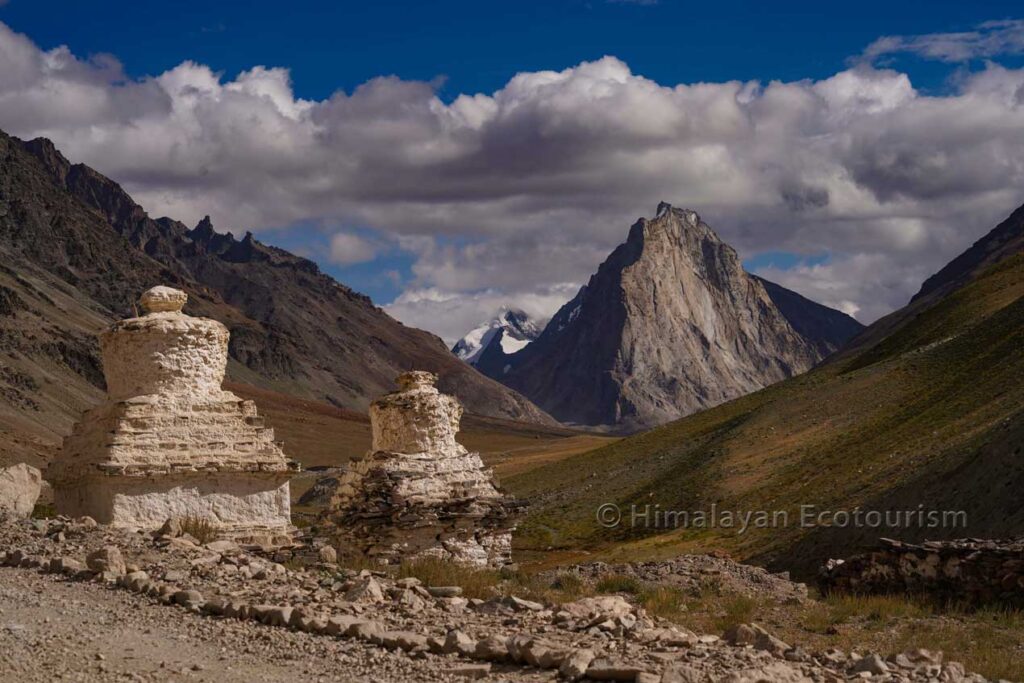
Zanskar
The region is world famous for its stunning rock formations and steep mountains.
The Nubra valley
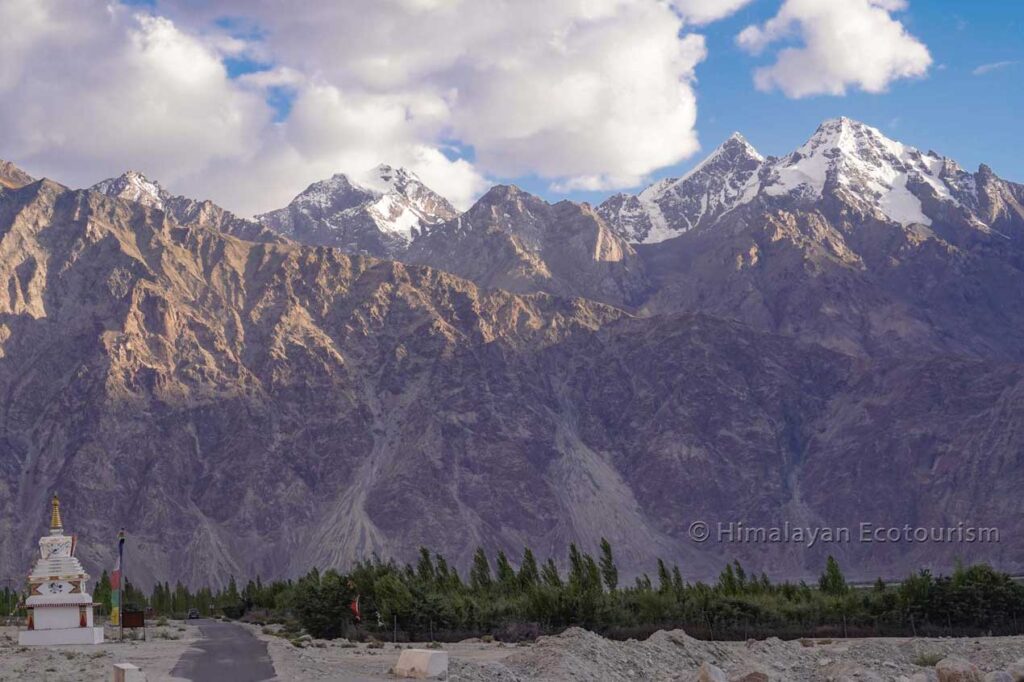
The Nubra Valley offers an authentic and offbeat experience for travelers seeking to explore Ladakh beyond the usual tourist spots.
At Himalayan Ecotourism, we encourage you to avoid the crowded areas like Hunder and instead immerse yourself in the valley’s quieter, more serene parts. Trek your way into Nubra to truly connect with the landscape, or opt for homestays where you can engage with local families, contributing to responsible tourism.
The valley is rich in wildlife, and hiking on the sand dunes provides a unique opportunity to observe the natural beauty and biodiversity of this remote region. By choosing less-traveled paths and embracing sustainable travel practices, you’ll experience Nubra in a way that leaves a positive impact on both the environment and the local community.
Frequently Asked Questions (FAQs)
What are the best places to visit in Leh Ladakh?
The top places to visit in Ladakh are not just Pangong Lake, Nubra Valley, and Shanti Stupa, but experiences beyond the ordinary. If you are looking for a true experience, visit villages like Tar, Skindyang, Tia, and Photoksar. Ladakh is beyond just monuments.
Are there less crowded places in Ladakh?
Yes, places like Tso Moriri and remote monasteries offer a quieter and more peaceful experience. You can also explore remote villages, where you’ll often find just a handful of people, making the experience feel truly calm and personal.
Is Ladakh safe for European tourists?
Yes, Ladakh is a very safe place for European tourists, with welcoming locals and a relaxed atmosphere. As long as you use trusted service providers for accommodation and transport, you can travel with confidence and avoid scams.
Do I need a visa to travel to Ladakh from Europe?
Yes, European travelers need an Indian tourist visa before arriving. The process is simple and can be done online through the e-visa system, with options like a 1-month or 1-year visa depending on your travel plans.
What is the best time to visit Ladakh?
The best time to visit Ladakh is between May and October, when the weather is stable, roads are open, and most places are easily accessible. Visiting in the winter months from December to March is ideal for spotting snow leopards and experiencing the rugged life of high-altitude villages.
How many days are enough for Ladakh?
A 7 to 9-day trip is enough to cover major places like Leh, Pangong Lake, and Nubra Valley. If you want to experience Ladakh to the best of its culture and spirituality, plan for at least 12–15 days.
Is altitude sickness a problem in Ladakh?
Due to the high altitude of 3500m above sea level, travellers coming from lower altitudes may experience mild symptoms of altitude sickness
How can I prevent altitude sickness in Ladakh?
To prevent altitude sickness in Ladakh, rest properly for at least 48 hours, drink plenty of water, avoid alcohol, and go slow so your body can adjust.
How do European tourists reach Ladakh?
European tourists usually reach Ladakh by first flying to Delhi in India, and then taking a domestic flight to Leh, which is the quickest and easiest option. During the summer, some travelers also choose to go by road from Manali or Srinagar for a more scenic journey.
Is Ladakh suitable for first-time visitors to India?
Yes, but it’s very different from typical Indian cities. Ladakh is quieter, less crowded, and more nature-focused, making it ideal for travelers looking for peace, landscapes, and culture.
Can I travel to Ladakh on my own or should I book a tour?
You can travel independently, especially around Leh. However, for remote areas like Zanskar, Markha, Suru, and Aryan valleys, booking a local guide or tour is recommended for convenience and safety. Public transport is highly unreliable, so reserving a vehicle for your trip is a better option.
What should I pack for a Ladakh trip?
Pack warm layers (even in summer), sunglasses, sunscreen, comfortable shoes, and basic medicines, as the weather can change quickly.
Is the internet available in Ladakh?
Internet is available in Leh but can be slow. In remote areas like Nubra Valley or Pangong Lake, connectivity is very limited or not available at all.
Do I need permits to visit Pangong Lake or Nubra Valley?
Yes, travelers need an Inner Line Permit (ILP) to visit restricted areas like Pangong Lake and Nubra Valley. These can be arranged online or through local travel agents.
Is Ladakh expensive compared to other places in India?
Yes, Ladakh is slightly more expensive due to its remote location. Transport, accommodation, and permits can add to the cost, especially during peak season.
Is Ladakh worth visiting for European travelers?
Yes, Ladakh offers a unique mix of Himalayan landscapes, Buddhist culture, and adventure experiences. For many travelers, it’s a once-in-a-lifetime destination.
Other Pages about Ladakh

Treks in Ladakh
Our selection of treks in Ladakh and Zanskar, one of the most stunning region on earth !

Spiritual tour to Ladakh
Learn about Tibetan Buddhism and dive in to the ancient wisdom

Experiential journey
Travel with a social enterprise that gives you the best experience of Ladakh