

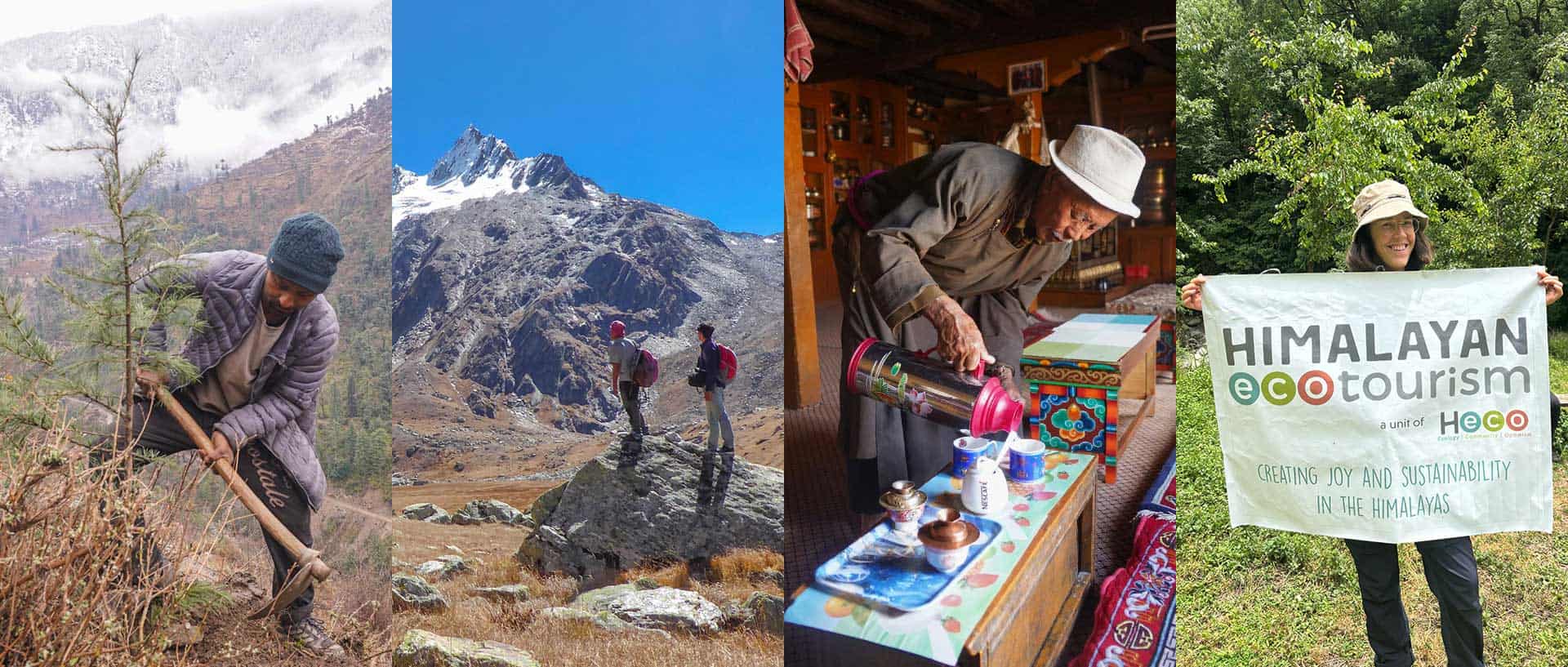
A proven, profitable model now ready for expansion
“A USD 3 trillion global market, with HECO scaling a proven regenerative model to reach a 20% margin and 6x revenue growth within five years.”

The problem
Tourism is one of the world’s largest industries, but in many ecologically and culturally sensitive regions, it is fundamentally broken.
Most tourism today operates on an extractive model, prioritizing short-term profit over long-term ecological and social stability. The result is a system where:
- Up to 70% of tourism revenue “leaks” out of local economies to external operators, platforms, and supply chains
- Local communities bear the environmental and cultural costs, while receiving only a small fraction of the value created
- Fragile ecosystems are degraded by poorly managed tourism, contributing to deforestation, waste accumulation, and increasing climate vulnerability
This challenge is particularly visible in regions like the Hindu Kush Himalaya, but the same structural issues exist across rural and nature-based destinations worldwide.
- The HKH region is warming at nearly twice the global average (ICIMOD, 2023)
- Environmental degradation is accelerating risks of flash floods, landslides, and forest fires
- The region supports 240 million people and provides water to 1.65 billion downstream
At the same time, global demand is shifting:
- 83% of travellers consider sustainable travel important
- Yet 44% struggle to find authentic, community-led experiences
This creates a structural gap:
- Large operators cannot deliver authenticity at scale without diluting it
- Local communities lack access to markets, technology, and standardized systems
The result is a broken bridge between global demand and local stewardship.
Despite a global adventure and regenerative tourism market projected to reach $1.5 trillion by 2030, there is still no scalable model that aligns profitability, community ownership, and ecological regeneration – in India or globally.
The solution – how Heco works
Heco is a scalable regenerative tourism platform designed to rebuild this system, starting in the Himalayas and expanding across India and other nature-rich regions worldwide.
At its core, Heco transforms tourism from an extractive industry into a symbiotic economic model, where:
- Travellers access authentic, high-quality experiences
- Local communities become owners, not service providers
- Tourism revenue directly funds ecological restoration
A “Business-in-a-Box” for Regenerative Tourism
Heco provides local partners with a plug-and-play system to build and operate high-quality tourism experiences in their region.
This includes:
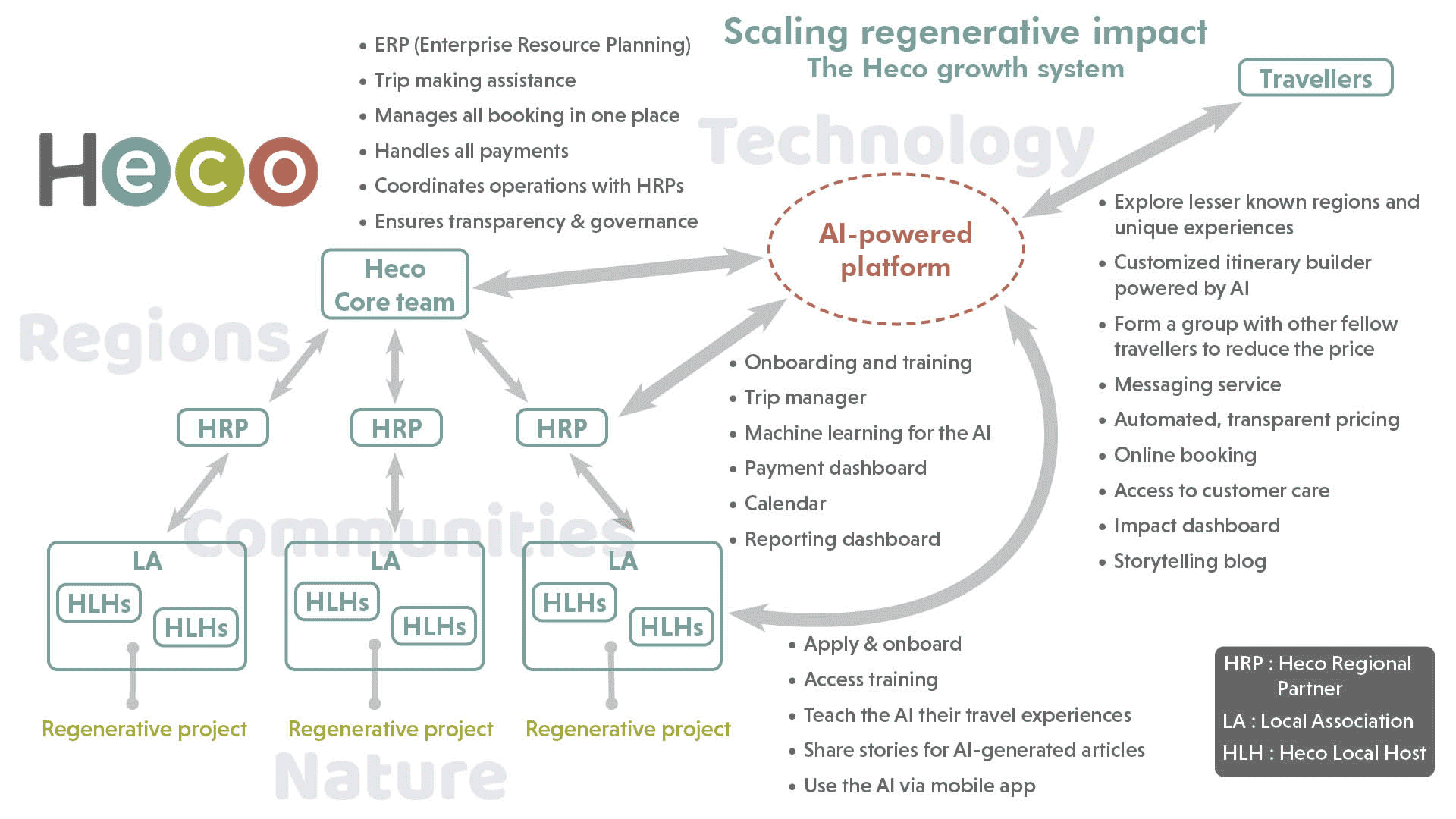
- A structured operational model (Regional Partners, Local Hosts, Local Associations)
- Training, standards, and governance frameworks
- Access to global markets through the Heco platform
- Integrated impact mechanisms (reforestation, conservation funding)
This allows regions – whether in Himachal, Ladakh, Jharkhand, Northeast India, or beyond India – to adopt the model without dependency on the central team presence.
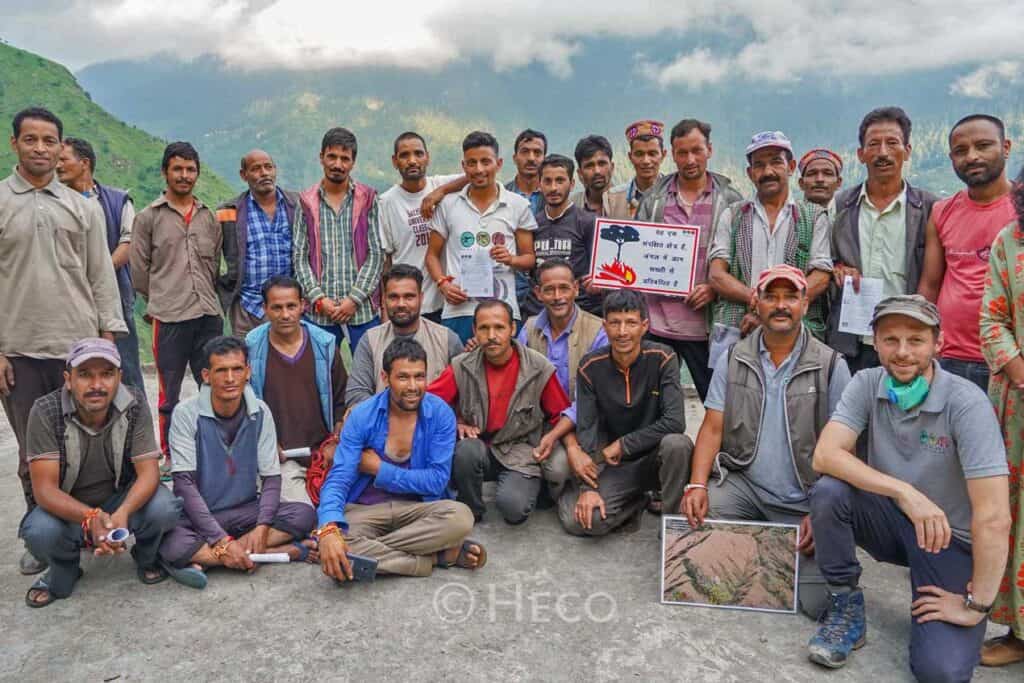
The first cooperative (LA) of Heco
Getting ready for a tree plantation drive in 2019, Himachal Pradesh, India.

AI-powered platform
Discover new regions and unique travel experiences
A Community-Owned System
Unlike traditional tourism:
- Local partners are co-owners of the value chain, not employees
- Revenue is retained locally, strengthening rural economies
- Communities have a direct incentive to protect their environment, as it becomes their primary asset
This creates a universal principle:
Wherever Heco operates, economic development drives conservation.
The Heco Platform : Technology as an Enabler
Heco’s AI-powered platform enables scale across geographies:
- Automates itinerary building and booking management
- Reduces operational overhead and reliance on large office teams
- Standardizes quality across diverse regions
- Collects data on traveller behaviour to guide expansion strategy
This allows Heco to scale efficiently from regional pilots to a multi-region, multi-country platform.
Why This Model Works
Heco operates on a simple but powerful loop:
- Technology brings global travellers and manages demand
- Communities deliver authentic, high-quality experiences
- Regeneration ensures destinations remain healthy and attractive
This creates a self-reinforcing system, adaptable to any geography:
- Better ecosystems → better experiences
- Better experiences → more demand
- More demand → more local income and restoration
Proven Model, Ready to Scale
Over the past 12 years, this model has been developed and tested in the Himalayas through:
- Community-led tourism initiatives
- Local trekking cooperatives
- Village tourism committees
- Ecological restoration programs
The Himalayas serve as a living laboratory, demonstrating that the model works.
Heco is now ready to scale this system across:
- Multiple states in India
- Diverse ecosystems (forests, deserts, tribal regions, mountains)
- International destinations facing similar challenges
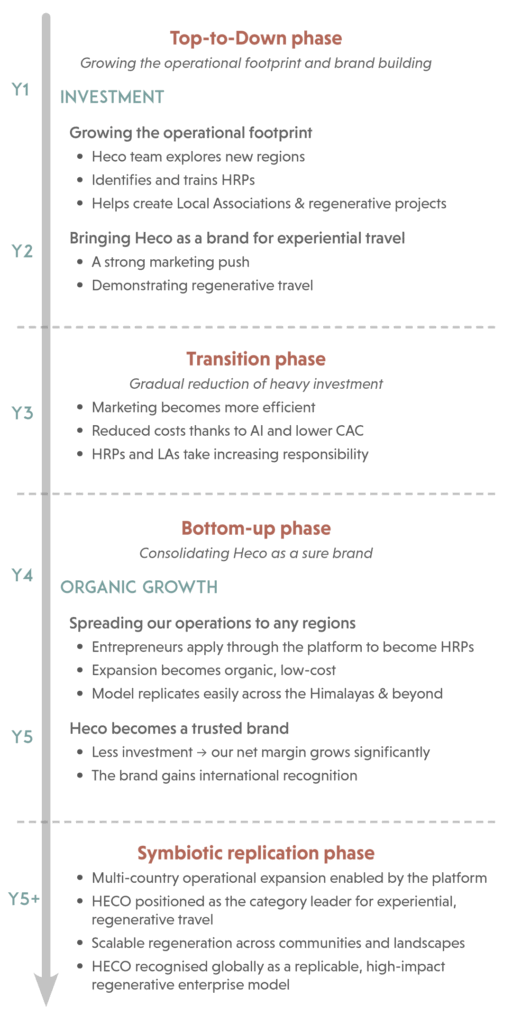
How It Works : Heco’s Implementation Phases
Phase 1 – Top-to-Down Demonstration (Years 1–2)
A high-investment foundation phase.
- Launch and stabilisation of the AI-powered Heco platform
- Onboarding and training of Heco Regional Partners (HRPs) in targeted regions
- With the HRPs, establishment of Local Associations (LAs) and designing of the regenrative project in all the new regions
- Deep on-ground presence to build systems, trust, and operational quality
This phase sets the structural and human foundation for long-term scale.
Phase 2 – Transition Phase (Year 3)
Gradual reduction of heavy investment.
- Operational systems begin functioning more autonomously
- HRPs and LAs take increasing responsibility
- AI platform reduces operational load and acquisition costs
- Marketing becomes more efficient due to early organic traction
The enterprise gradually shifts from set-up to stabilisation.
Phase 3 – Bottom-Up Growth Phase (Years 4–5)
Organic growth accelerates; margins begin to rise.
- SEO-driven inbound traffic increases through added regions
- Word-of-mouth from international travellers grows
- Lower CAC through compounding organic visibility
- Reduced need for field staff intensity
- Higher-value foreign travellers increase revenue per visitor
Investment decreases while revenue and efficiency rise.
Phase 4 – Symbiotic Network Replication (Years 5+)
Heco becomes a regenerative ecosystem enterprise.
- New HRPs onboard themselves into the Heco platform, organically growing our operational footprint
- Knowledge, standards, and conservation protocols circulate across regions
- HRPs support each other, forming a distributed resilience network
- The model becomes replicable across sectors and geographies
This is where Heco evolves beyond tourism into a scalable symbiotic economic model.
Economics Overview
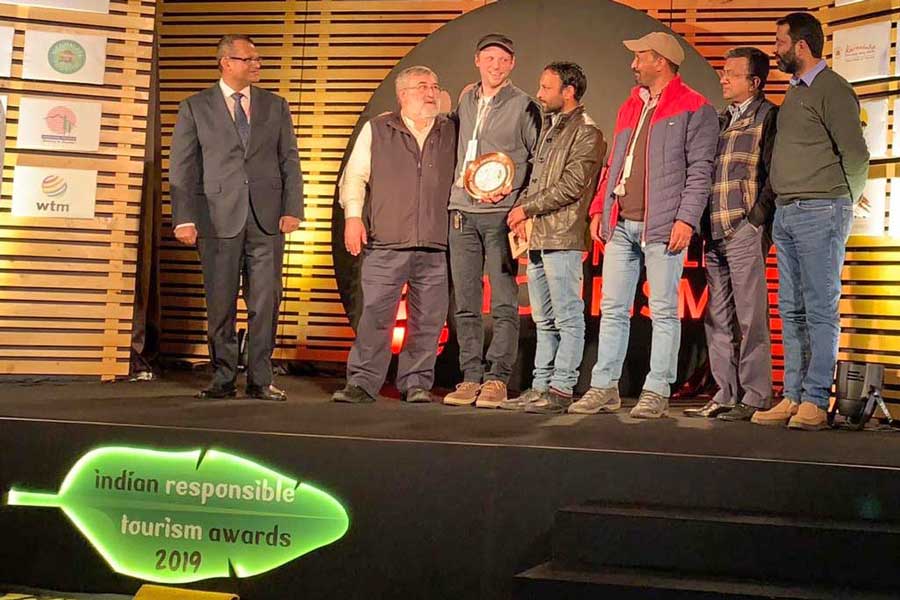
MULTI-AWARDED SOCIAL ENTERPRISE
Receiving our first award in the field of responsible tourism
Market Opportunity
Total Addressable Market (TAM)
Heco operates at the intersection of adventure, cultural, and sustainable tourism.
Globally, this segment is valued at ~USD 3 trillion today, and projected to grow to USD 15 trillion by 2035, driven by:
- demand for meaningful and regenerative travel
- a shift toward community-led and nature-based experiences
- increasing climate-conscious behaviour among travellers
- premium travellers seeking authenticity rather than mass tourism
This positions Heco within one of the fastest-growing segments of global tourism.
Serviceable Addressable Market (SAM)
HECO focuses on higher-budget, long-haul international travellers and Indian domestic experiential travellers.
Two main customer groups
1. Foreign travellers (premium market)
- Average stay: 14 days
- Typical spend: USD 1,600 per person
- Today: 25% of HECO’s travellers
- Year 5: 60% foreign travellers (due to targeted marketing + premium products)
2. Indian experiential travellers
- Average stay: 5 days
- Typical spend: USD 220 per person
- Today: 75% of travellers
- Year 5: 40% of travellers
Why SAM grows sharply
- Shift toward foreign travellers → higher avg. revenue per traveller
- AI-powered platform → higher SEO visibility + conversion
- Marketing push → more foreign inbound leads
- Network effect of new regions → more pages, more search queries
- Brand recognition → steady organic growth that compounds over time
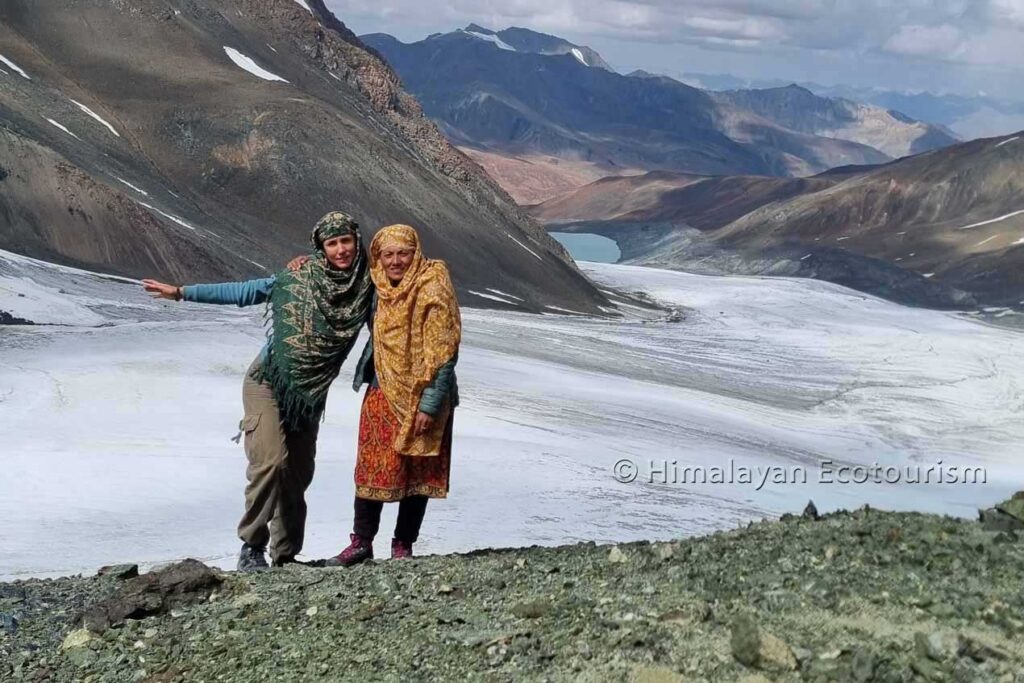
Charline and Tashi from Photoksar
On the Red and Blue Lakes trek, a Heco exclusive in Zanskar, India.
Revenue Growth Strategy
Paid acquisition → Organic acquisition
Years 1–3 :
- Strong marketing investment
- Focus on foreign markets (US, Europe, Australia)
- CAC supported by a premium segment
Years 3–5 :
- Compounding organic SEO + word-of-mouth
- HECO becomes a trusted platform to discover new Himalayan experiences
- Lower acquisition costs → higher margins
Regenerative Revenue Allocation
HECO embeds regeneration directly into its financial model :
- 1% of all revenue → sustainable operations (fuel reduction, biodegradable supplies, waste management)
- 3% of all revenue → regenerative projects (ecological restoration, fire prevention, women’s empowerment)
This ensures that growth → regeneration → more growth.
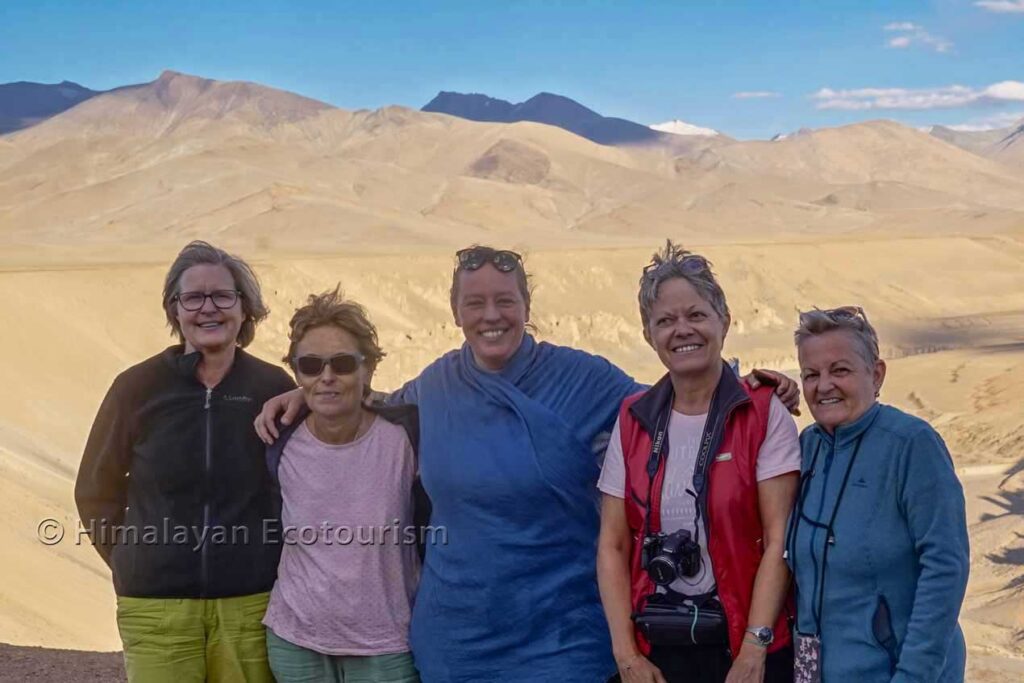
Europeans travelling with Heco
Enjoying a spiritual journey in Ladakh filled with unique experiences.
Financial Projections (INR crores & USD)
| Projections over five years | ||
|---|---|---|
| Year | Revenue (₹ Crores & USD) | Net margin |
| Y1 | 6.9 – 773k | -9% |
| Y2 | 9.7 – 1,089k | 4% |
| Y3 | 12.6 – 1,406k | 16% |
| Y4 | 23.0 – 2,572k | 17% |
| Y5 | 43.4 – 4,858k | 20% |
Why margin dips early
Years 1–2 require heavy investment in :
- marketing
- platform development
- regional setup (Top-to-Down phase)
Margins increase as :
- the foreign customer ratio grows
- HRPs handle more operations
- CAC drops due to organic traffic
- platform automation reduces cost
- franchise-like scaling drives economies of scale
By Year 5, HECO returns to 20% net margin, matching today’s margin but at 6 – 7x revenue.
Investment Ask
Amount: ₹2.7 Crores (~USD 300k)
Structure: Open to equity, debt, or blended investment.
If fully equity:
- 18% stake at a ₹14.7 Crore (USD 1,626k) post-money valuation.
Use of Funds
The capital will be deployed across three pillars :
1. AI Platform Development
Building the core engine for scalable, automated, community-led tourism.
2. Marketing Launch
Two years of targeted digital campaigns in foreign markets to rapidly grow the premium segment.
3. Top-to-Down Phase
Field deployment for two years:
- onboarding new regions
- training Local Associations
- recruiting & supporting HRPs
- establishing high-quality regenerative operations
This phase is essential to maintain authenticity while scaling.
The team

Stephan Marchal
stephan@heco.eco
Stephan Marchal
Stephan has spent over two decades working at the intersection of rural development, community empowerment, and social entrepreneurship in India. His journey began with several years in the non-profit sector, working closely with indigenous communities in central and eastern India, before transitioning into building enterprise-led solutions rooted in local ownership.
In 2013, he founded Himalayan Ecotourism with a clear intention: to build a viable business model that could grow alongside local communities, rather than at their expense. Over the years, this approach has evolved into a broader ecosystem of initiatives spanning responsible tourism, women’s empowerment, and ecological restoration across multiple Himalayan regions.
Stephan’s work is grounded in long-term field presence, trust-based relationships with communities, and a belief that economic dignity, cultural confidence, and conservation must move together. Today, he continues to shape Heco as a platform for regenerative travel and community-led development.
Gaurav Pawar
Gaurav’s experience has been shaped through his long-term involvement with Heco and its evolution on the ground. Over the years, he has worked closely with local communities, field teams, and partners across different regions, gaining a deep, practical understanding of how community-led tourism operates in real conditions.
His journey within Heco has allowed him to witness first-hand how trust is built, how collective systems take shape, and how operational choices directly impact livelihoods and ecosystems. This sustained engagement has given him a strong grasp of the day-to-day realities of running responsible tourism initiatives, from coordination and logistics to relationship-building at the village level.
Gaurav’s contribution is rooted in continuity, presence, and adaptability, ensuring that Heco’s principles are translated into practices that work on the ground and can be strengthened as the organisation grows.

Gaurav Pawar
gaurav@heco.eco

Prachi Jetley
Prachi Jetley
Prachi brings a strong blend of strategic thinking, experience design, and operational execution within the travel and hospitality space. Her background spans technology, travel, and experiential design, with several years dedicated to curating culturally rooted journeys and managing their end-to-end delivery.
She has worked extensively on designing bespoke itineraries, coordinating with local partners, and overseeing complex trip operations, ensuring that traveller expectations, on-ground realities, and meaningful engagement with place remain aligned. Her work reflects a deep understanding of how thoughtful design and careful execution shape memorable travel experiences.
Alongside this, Prachi has been actively involved in community-focused initiatives with Himalayan Ecotourism in the Tirthan Valley, contributing to women’s empowerment, reforestation efforts, and education-related programmes. Her perspective connects traveller experience with social impact, reinforcing Heco’s vision of tourism as a tool for shared value and regeneration.
Shivya Nath
Shivya is a writer, storyteller, and sustainability advocate whose work explores the relationship between travel, environment, and personal responsibility. With years of experience documenting slow travel, conservation, and climate realities, she brings a deep reflective dimension to Heco’s vision.
Her perspective bridges lived travel experiences with broader questions around ethics, impact, and regeneration. Shivya’s engagement helps shape Heco’s narrative as one that challenges extractive tourism models while inspiring travellers to engage more consciously with places and people.
She contributes a strong voice to Heco’s mission of redefining what travel can mean in an ecologically fragile world.

Shivya Nath

Anirban Bhattacharya
Anirban Bhattacharya
Anirban brings a deep understanding of the corporate world, shaped by extensive experience working with businesses, investors, and institutions operating across complex market environments. His background equips him with a strong grasp of how capital moves, how decisions are made at the board and investor level, and how organisations navigate regulatory and policy frameworks.
He is particularly adept at analysing market forces, structuring growth narratives, and translating long-term visions into frameworks that resonate with investors and strategic partners. Anirban’s perspective helps bridge the gap between mission-driven initiatives and the practical realities of scale, risk, governance, and financial sustainability.
Within Heco, his contribution lies in grounding ambition within real-world economic and institutional logic, ensuring that the organisation’s expansion strategy remains credible, investable, and aligned with broader market dynamics.
Akash Sahay
Akash is the founder and CEO of a full-service software development agency based in Ranchi, Jharkhand. With over 15 years of hands-on programming experience, he brings deep expertise across PHP, Laravel, jQuery, HTML, and CSS, alongside a growing command of Flutter, Next.js, and modern web ecosystems. Akash leads end-to-end development across client projects spanning web applications, mobile apps, UI/UX design, and digital solutions for clients across India, Canada, and the UAE.
For the Heco Portal, Akash plays a pivotal role as the lead technical architect – translating complex multi-role platform requirements into scalable, maintainable systems. His experience building booking platforms, AI-integrated portals, and multi-vendor dashboards makes him ideally suited to craft Heco’s traveler-host ecosystem. He is passionate about using technology to bridge communities and create meaningful digital experiences.
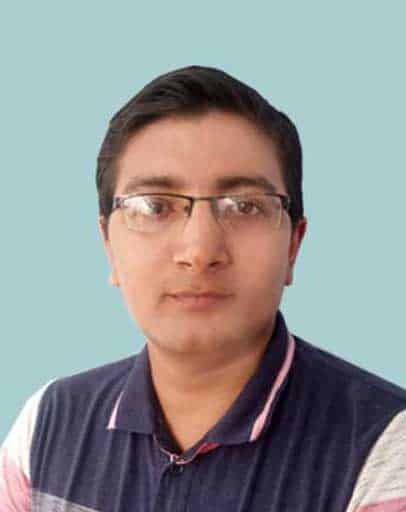
Akash Sahay

Parul Anand
Parul Anand
Parul works at the intersection of artificial intelligence, ethics, policy, and law, with a strong focus on ensuring that emerging technologies are developed and deployed responsibly. Her experience spans global AI policy research, responsible AI governance, and applied ethics, with contributions to both international and India-specific AI initiatives.
She has worked with leading policy and research organisations on questions of AI regulation, fairness, accountability, and transparency, including research on global AI governance trends, responsible scaling frameworks, and bias mitigation strategies. Her work has engaged closely with issues of data ethics, environmental impact, and the social consequences of AI systems, particularly from the perspective of the Global South.
At Heco, Parul’s role is to ensure that the organisation’s use of technology, especially AI-enabled systems, remains ethically grounded and aligned with community realities. She helps embed principles of transparency, fairness, and accountability into the platform’s design, while anchoring technological decisions in local socio-ecological contexts rather than abstract optimisation goals.
Parul brings a governance-oriented lens to Heco’s expansion, ensuring that innovation supports – rather than compromises – trust, dignity, and long-term responsibility.
Videos about the work of Heco
Women-led treks
In the Great Himalayan National Park – Tirthan Valley
Re-inventing tourism in Ladakh
Brigning back tourism, income and hope in the villages of Ladakh.
First plantation drive
A community-led ecological restoration program emerging from a tourism business