



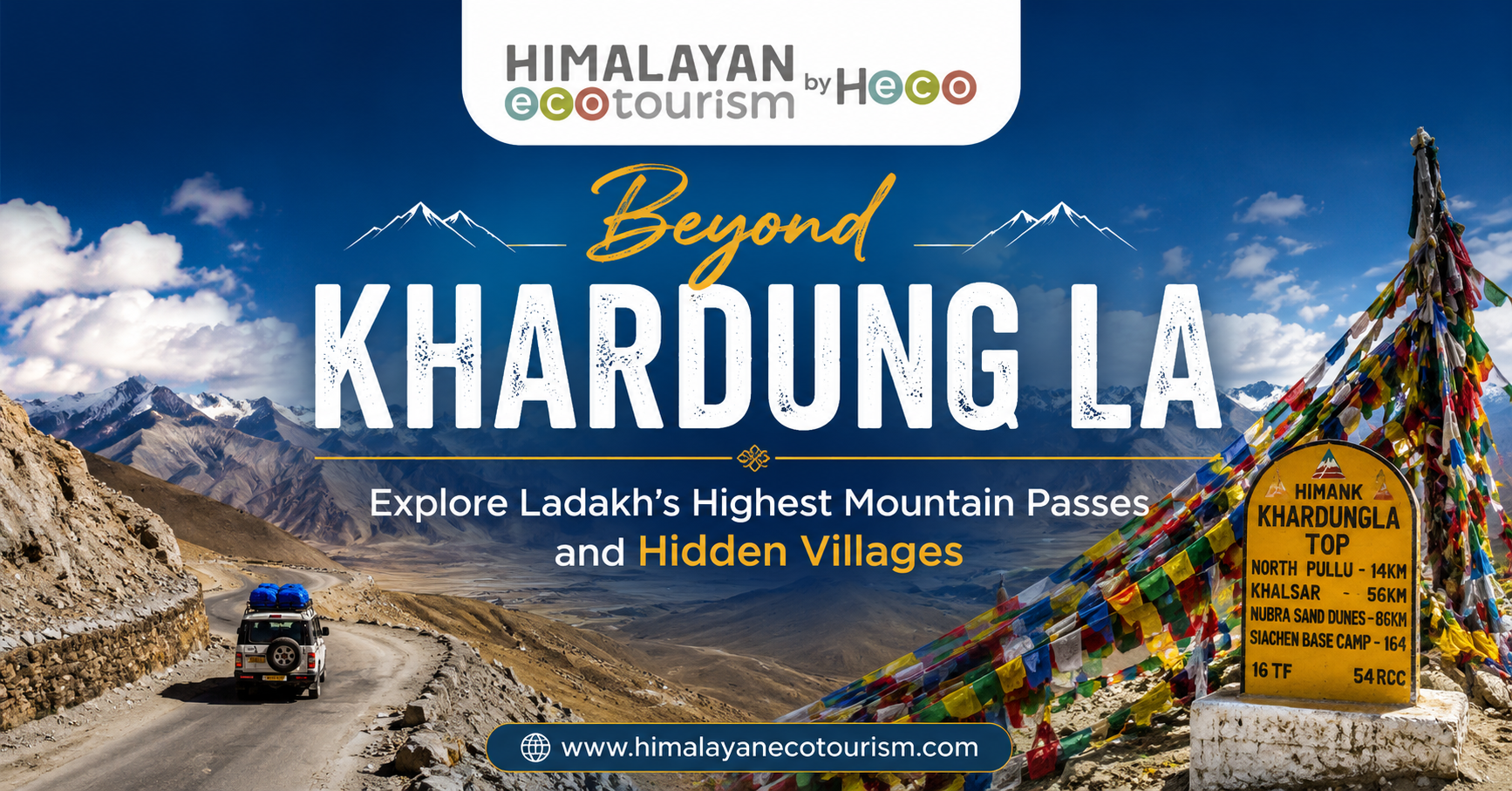
Beyond Khardung La: Explore Ladakh’s Highest Mountain Passes and Hidden Villages
Khardung La (5,359 m) is famous, but it’s only one of more than a dozen high passes in Ladakh worth crossing. Chang La (5,360 m) leads to Pangong Tso, Wari La (5,312 m) connects Nubra Valley to Pangong on a quieter route, and Tanglang La (5,328 m) marks the Manali-Leh highway. As of October 2025, the world’s highest motorable road is Mig La (about 5,900 m / 19,400 ft) near Hanle, which overtook the previous record holder, Umling La (5,798 m). Each pass opens the door to villages that rarely appear on a standard Ladakh itinerary, from Turtuk near the Pakistan border to Photoksar in the Zanskar range.
Key Takeaways
- The classic Leh–Nubra–Pangong–Manali route is only the beginning. Including village stays and local experiences creates a richer and more meaningful Ladakh journey.
- Khardung La is Ladakh’s most popular pass, but Umling La and Mig La reach even greater heights. Don’t just cross the passes—discover the villages beyond them.
- Wari La offers a rougher, quieter alternative route between Nubra Valley and Pangong Tso.
- Passes like Sisir La and Singe La lead into Zanskar and connect to villages such as Photoksar that see very few visitors.
- All major passes are open only from roughly May or June to October, depending on snowfall.
- Acclimatization, permits and fuel planning matter more here than almost anywhere else in the Himalayas
Why Ladakh’s Passes Are More Than a Photo Stop
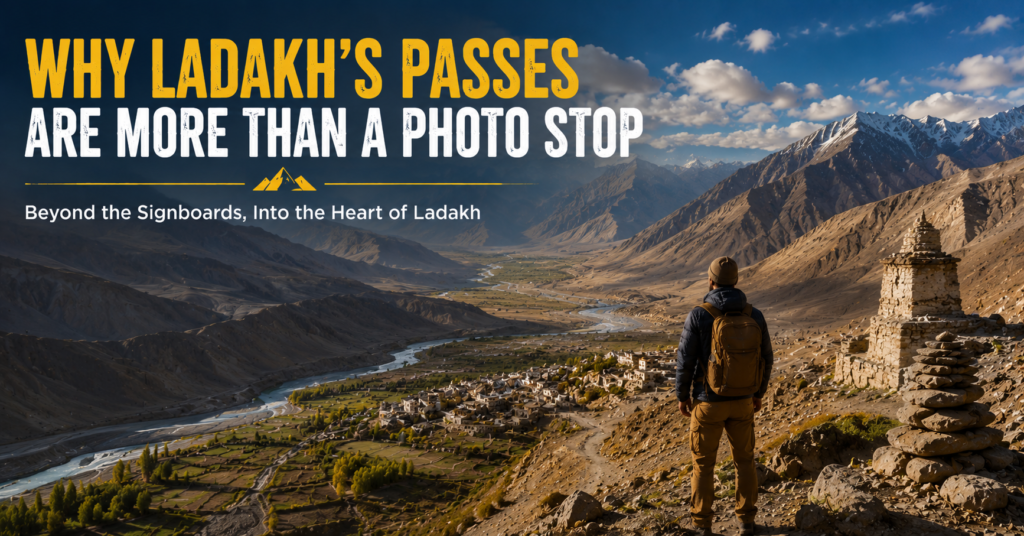
Every pass in Ladakh, known locally as a “La,” was cut by trade and pilgrimage routes long before it carried tourist traffic. Crossing one isn’t just a scenic detour; it’s usually the only way into the valley on the other side. That’s what makes them worth understanding properly rather than just ticking off Khardung La for the signboard photo. Knowing which passes lead where helps you build an itinerary around villages and valleys most travellers never reach.
If you’re planning a longer road trip through Ladakh, the passes below are the backbone of nearly every itinerary in the region, connecting the Nubra Valley, Changthang and Zanskar.
Khardung La: The Famous Gateway
Khardung La sits at 5,359 metres and connects Leh to the Nubra Valley. Built in 1976 and opened to vehicles in 1988, it’s long been marketed as the world’s highest motorable road, a claim that’s no longer accurate but hasn’t dented its popularity. The pass is maintained year-round for military supply routes to the Siachen Glacier, which keeps the road in reasonably good condition even by Ladakh standards.
Beyond the pass, Nubra Valley opens up into sand dunes, Bactrian camels and villages like Diskit, Hunder and Turtuk, a Balti Muslim village close to the Line of Control that only opened to tourists in 2010.
Chang La: The Road to Pangong
At 5,360 metres, Chang La is technically higher than Khardung La and leads travellers from Leh toward Pangong Tso via Sakti and Tangtse. Many riders find the road surface here better maintained than on Khardung La. Along the way, monasteries at Traktok and Chemrey are worth the short detour, part of the wider network covered in our guide to Ladakh’s monasteries.
Wari La: The Quiet Alternative
Wari La, at around 5,312 metres, connects Nubra Valley directly to Pangong Tso via the Shyok river route, bypassing Leh entirely. It’s rougher and far less travelled than the Chang La approach, which is exactly its appeal. The stretch between Agham and Sakti villages feels almost entirely empty, a rare thing in a region that draws heavier tourist traffic every year.
Tanglang La and the Manali-Leh Highway Passes
Tanglang La (5,328 m) is the highest point on the Manali-Leh Highway and one of the passes most overland travellers cross without a second thought, simply because it’s on the way. Breaking the drive with a night at Pang or Tso Kar before tackling Tanglang La makes the altitude gain far less punishing than pushing straight through from Sarchu.
Umling La and Mig La: The Race for the World’s Highest Road
Umling La, near Hanle in the remote Changthang region, held the Guinness World Record for the world’s highest motorable road from 2021 until October 2025, at 5,798 metres, higher than Everest Base Camp. It was surpassed by Mig La, another Border Roads Organisation project near Hanle, which reaches roughly 5,900 metres (19,400 ft). Both passes connect to Hanle, home to one of the world’s highest astronomical observatories and some of the darkest night skies left in India.
Did You Know? Umling La’s road was officially certified by Guinness World Records as the world’s highest motorable road in November 2021, at an altitude of 5,798.251 metres, built by India’s Border Roads Organisation under Project Himank. The record has since passed to the newly built Mig La road nearby, but Umling La remains one of only a handful of roads on Earth built above 19,000 feet. Source: Guinness World Records
Passes Into Zanskar: Sisir La, Singe La and Pensi La
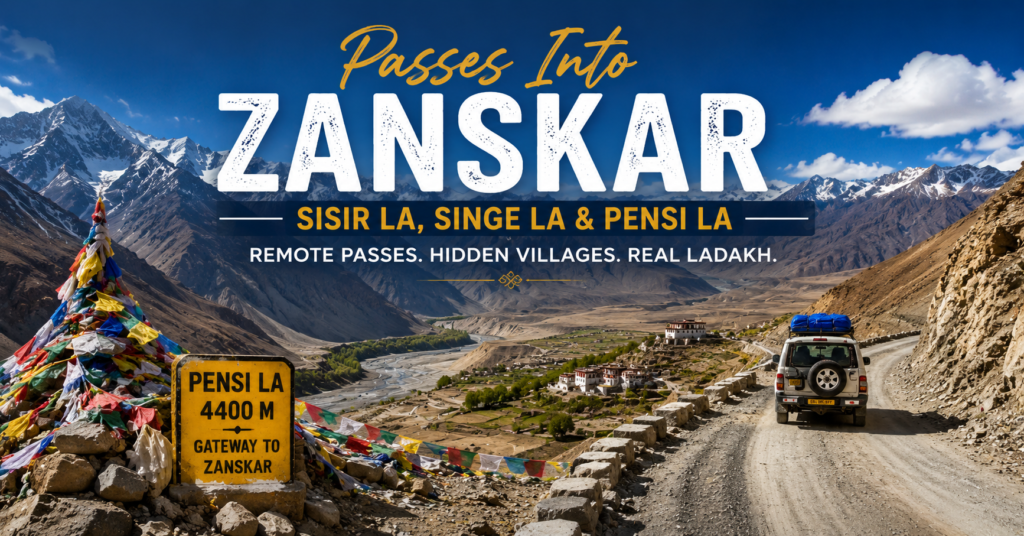
The passes leading into Zanskar see a fraction of the traffic of the Leh-Nubra-Pangong circuit and open up a very different Ladakh.
- Sisir La connects the villages of Hanupatta and Photoksar, both on classic Zanskar trekking routes.
- Singe La links Zanskar to the Lahaul region of Himachal Pradesh and is considered one of the more demanding crossings on foot.
- Pensi La, often called the “Gateway to Zanskar,” offers views of the Drang-Drung Glacier and marks the entry point for most road trips into the valley.
These passes reward travellers who have time for slower, village-based travel rather than a fixed sightseeing checklist, something we build into our village experience trips in Ladakh.
Hidden Villages Worth the Detour
Crossing a pass is usually only half the reason to go. Here are villages that make the climb worthwhile.
Turtuk: A Balti village beyond Khardung La in Nubra Valley, with its own language, architecture and apricot orchards, distinct from the rest of Ladakh.
Photoksar: A remote village on the Sisir La route, framed by dramatic cliffs and reachable mainly by trekkers and 4×4 travellers. Read more in our Photoksar village guide.
Lingshed: A high-altitude Zanskari village near Photoksar, covered in our Lingshed village and trek guide, reachable only by crossing several remote passes.
Markha: The main village on the Markha Valley route below Kongmaru La, detailed in our Markha village guide.
Hemis Shukpachan, Tar, Tia, Mangyu and Skindiyang: A cluster of quieter Sham Valley and Central Ladakh villages, each covered individually on our site, that reward travellers who build extra days into a pass-crossing itinerary instead of rushing between the famous stops.
Hanle: Beyond Umling La and Mig La, home to a working monastery and a dark-sky reserve popular with astrophotographers.
Planning Your Route: Practical Tips
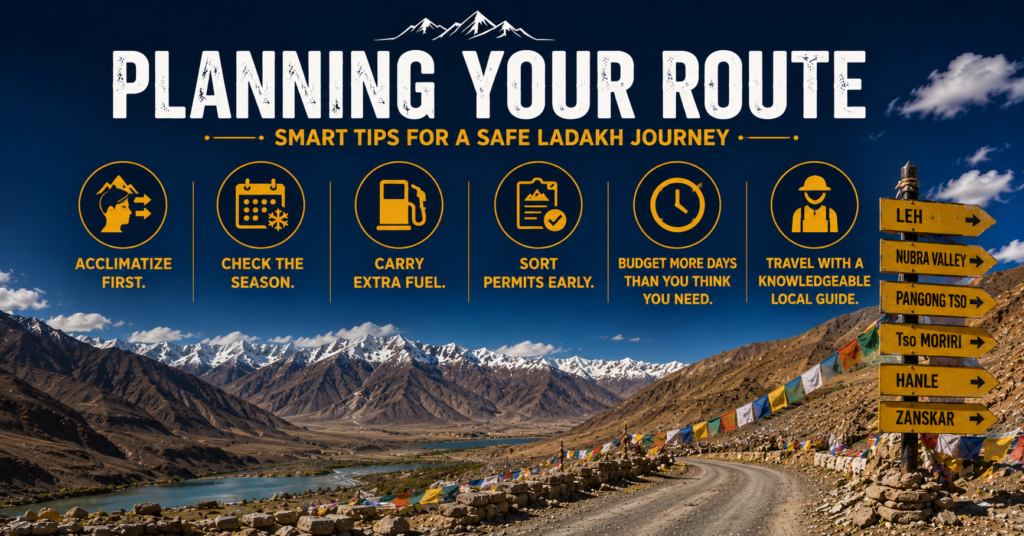
- Acclimatize first. Spend at least two full days in Leh before attempting any pass above 5,000 metres.
- Check the season. Most high passes are open only from late May or June through October, depending on snowfall.
- Carry extra fuel. Petrol pumps are scarce beyond Leh, Karu and Upshi, especially on Changthang and Zanskar routes.
- Sort permits early. Nubra Valley, Pangong, Tso Moriri, Hanle and parts of Changthang all require an Inner Line Permit, arranged in Leh.
- Budget more days than you think you need. Road conditions on routes like Wari La or the Zanskar passes change quickly and often demand a slower pace than planned.
- Travel with a knowledgeable local guide on the more remote passes, where signage is minimal and mobile networks don’t reach.
- For background on how these roads get built and maintained at extreme altitude, the Border Roads Organisation’s official project page is a useful primary source.
Frequently Asked Questions
Q: Is Khardung La the highest motorable pass in the world?
No. Khardung La earned its iconic reputation as a publicly accessible and commercially travelled mountain pass connecting Leh with the Shyok and Nubra valleys. Today, higher roads such as Mig La and Umling La near Hanle surpass it in elevation.
Q: Do I need a permit to cross these passes?
Yes, an Inner Line Permit (ILP) is required for Nubra Valley, Pangong Tso, Tso Moriri, Hanle and the Changthang region. Tourist visas usually allow a straightforward permit process, while business visa holders may face additional formalities. Always check the latest permit requirements before you travel.
Q: When do Ladakh’s high passes open?
Most open between late May and June, once snow clearance is complete, and close again by October or November as winter sets in.
Q: Can beginners ride or drive over these passes?
Khardung La and Chang La are well maintained and manageable for most drivers with some altitude preparation. Routes like Wari La, Mig La, Umling La and the Zanskar passes are better suited to experienced riders, drivers or those travelling with an experienced local operator.
Q: How many mountain passes will I cross on a typical Ladakh trip?
Rather than rushing to cross as many passes as possible, plan to explore 4–5 major passes and spend a night or two in the nearby villages. This offers a deeper experience of Ladakh’s landscapes, culture and local way of life.
Q: Is altitude sickness a real risk on these passes?
Yes. Passes above 5,000 metres put you at roughly half the sea-level oxygen concentration, so symptoms of acute mountain sickness are common if you haven’t acclimatized properly in Leh first.
Q: What is the difference between Umling La and Mig La?
Both are Border Roads Organisation projects near Hanle in the Changthang region. Umling La held the Guinness World Record for the world’s highest motorable road from 2021 to 2025, at 5,798 metres. Mig La, completed in October 2025, is roughly 100 metres higher and now holds the record.
Q: Which pass is best for photography?
Chang La and the Pangong approach offer dramatic snow and lake views with relatively easy access. For a starker, more otherworldly landscape, the Hanle-Umling La-Mig La stretch in Changthang is hard to beat.
 Ladakh in July: Is It Too Crowded for European Travelers?
Previous
Ladakh in July: Is It Too Crowded for European Travelers?
Previous
 Zanskar Festival 2026: Dates, Traditions & How to Visit
Next
Zanskar Festival 2026: Dates, Traditions & How to Visit
Next